


 Help Center
 How to get help




Partoo’s SEO and GEO expertise, at your service
Got a question or a specific need? Our SEO and GEO experts support you at every stage of your project, turning your Store Locator into a genuine driver of footfall to your outlets.


Powered by Jim

Our Partoo experts support you at every stage of your project.

Complete, well-structured store pages help you climb to the top of recommendations.

With clear, effective call-to-actions tailored to your business priorities.
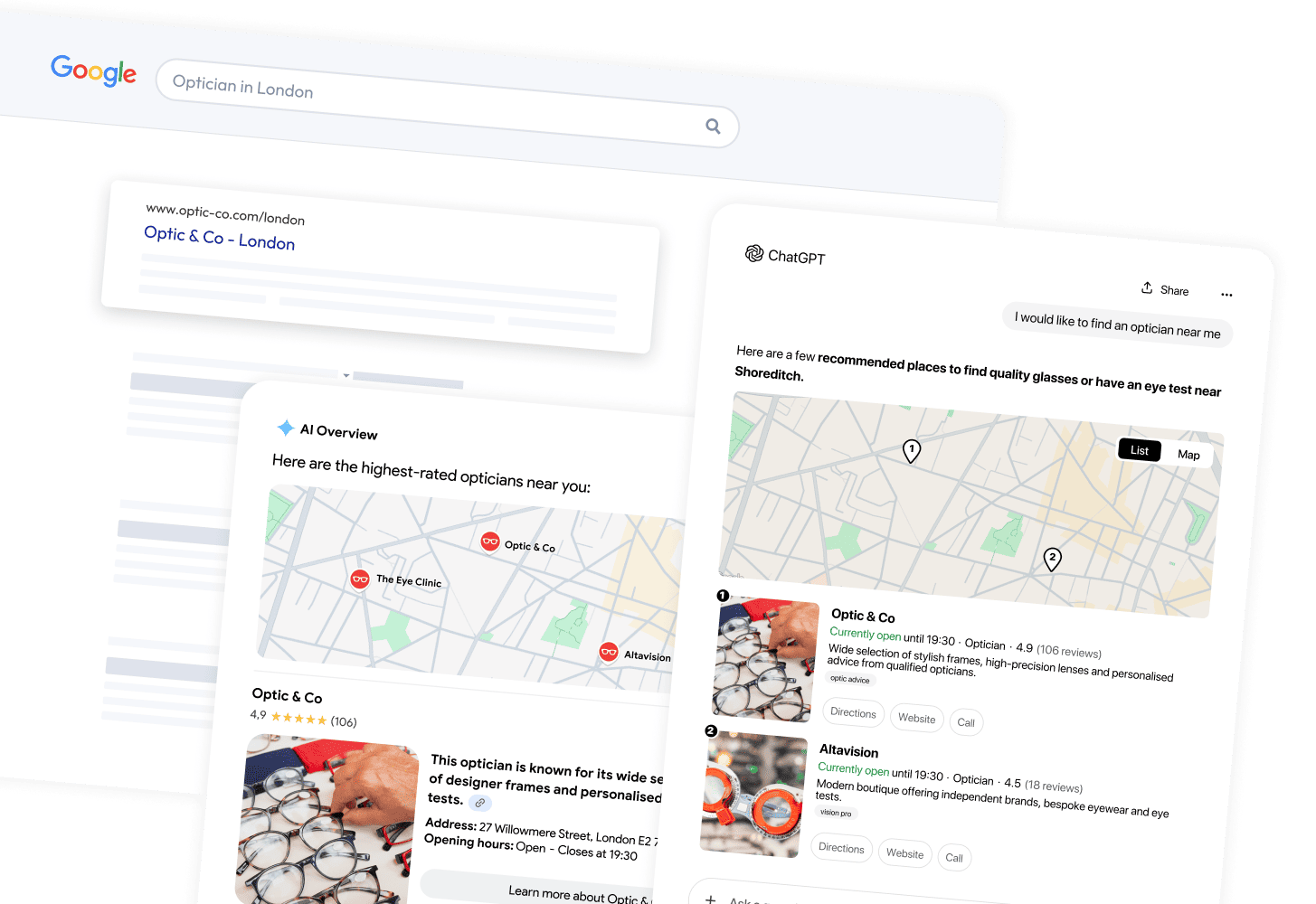
Each page in your Store Locator is optimised for both SEO and GEO, with a unique URL, structured data (Schema.org) and geographic internal linking. Your businesses become visible on Google, in AI Overviews and in generative AI answers for local queries related to your industry, whether users are searching by city, area or region.

Your store pages reflect your brand, for visitors and the generative AI exploring them alike. Choose the design (logo, colours, font) and the sections to display (Google reviews, FAQs, location overview, photo gallery, etc.), with support from our design team or independently from the Partoo platform.
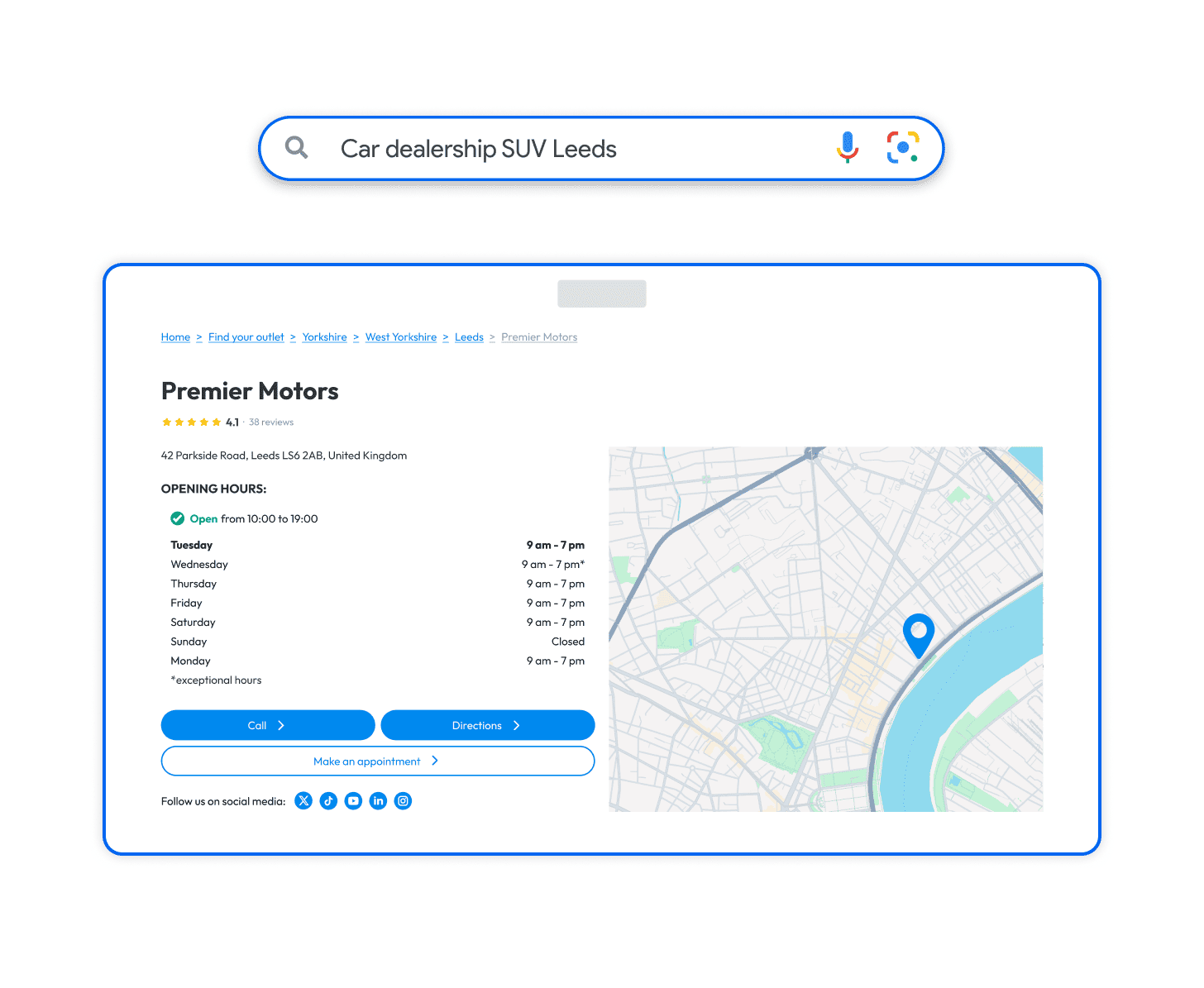
Your Store Locator’s local-intent pages combine a product or service with a location, to answer the most qualified searches (“sports shop London”, “balayage hairdresser Manchester”, etc.). They strengthen your presence on these strategic queries, on Google, ChatGPT, Gemini, Perplexity, and more.

Manage and optimise your businesses’ local data in Partoo, and automatically publish it to your Store Locator and the main local listing platforms. Accurate, consistent information is a trust signal for Google and AI-powered search engines.

Measure your Store Locator’s traffic and performance in real time with a dedicated dashboard, and track the impact of your visibility on search engines and AI.

Got a question or a specific need? Our SEO and GEO experts support you at every stage of your project, turning your Store Locator into a genuine driver of footfall to your outlets.

“An efficient, reliable and 100% customisable Store Locator”
Thanks to Partoo, our Store Locator Partoo is efficient, well-designed and SEO optimised. Partoo's team also gives us the flexibility to add any functionality we may need.
A Store Locator brings together pages for all the businesses in your network on your own website, with a dedicated page for each one (address, opening hours, services, reviews, directions, etc.). It helps customers easily find their nearest store while driving qualified traffic from Google and other search engines to your website, then on to your physical businesses. Today, it is a key part of any multi-location brand’s web-to-store strategy.
A well-structured Store Locator is both a tool for visitors and a knowledge base for search engines (Google, Bing) and conversational AI. Local SEO helps you rank higher on Google for searches with a geographic element (“bakery in London”, “car dealership in Manchester”), while GEO is your ability to be cited and recommended in AI-generated answers. Both rely on the same foundations: structured, up-to-date and consistent data across all the platforms where your information is published.
Yes. That is one of its main purposes: to attract qualified traffic to your website before directing visitors to the most relevant business. By optimising each store page for local SEO and GEO, you can capture high-intent searches (“product + city”) that would otherwise go to competitors or third-party directories.
A dedicated dashboard lets you track the traffic generated by your Store Locator in real time, along with clicks and conversions on your calls to action (online purchases, appointment bookings, quote requests). You can then adjust your page UX or SEO settings to maximise performance.
The golden rule is one unique page per business, with its own URL, because that is the only way for Google and AI systems to index each point of sale accurately. If you have 50 stores, you should have 50 distinct local pages. Beyond store pages, a Store Locator typically includes two other page types: the main (or index) page, which centralises SEO authority, and intermediate pages (cities, counties, regions), which group your businesses. Up to around 50 stores, city pages are usually enough; beyond that, you may need a more complex architecture.
Schema.org markup is a set of structured data, invisible to visitors but readable by search engines and AI systems, using the JSON-LD format recommended by Google. On a Store Locator, it describes each business precisely: address and GPS coordinates using LocalBusiness markup, opening hours (including special opening hours), services and customer reviews.
Internal linking connects your store pages to one another and to the rest of your website, passing SEO authority through to each store page. Without an incoming link, a store page becomes an orphan page, effectively invisible to Google. Best practices include a clickable breadcrumb on every page (Home > Our stores > England > Greater London > London > Oxford Street Store), a “nearby stores” section and contextual links from product pages or blog articles. Internal linking is just as important for AI: it helps AI systems understand your brand entity and geographic footprint, which is essential if you want to appear in their recommendations.
Yes. Generative AI increasingly uses Store Locators as a data source for local searches. A Store Locator with Schema.org markup, up-to-date data and coherent internal linking creates a trusted source that AI systems can cite in their answers. By contrast, a network without a structured Store Locator, or with inconsistent data, risks becoming invisible across these new search channels.
Yes, and we recommend implementing both solutions together. They are managed in the same Partoo application: Presence Management ensures your information (opening hours, address, categories, attributes) is accurate and consistent across Google Business Profile, GPS platforms, directories and social media, while the Store Locator publishes the same enriched information on your own website. Together, they form the backbone of your local visibility on Google and generative AI.
Yes, and we recommend it. Displaying Google reviews directly on each store page reassures visitors before they make the trip and provides an additional trust signal for local SEO. Review volume, recency and rating are among Google’s ranking factors, and they also shape how generative AI perceives your brand’s reputation.
Yes. Each year, you can ask us to revisit your Store Locator’s original design and add new features at no additional cost. Your Store Locator is never fixed: it evolves with your business, your needs and changing search best practices.
Nowadays, having a solid online presence is a must if you want to grab the…
We’re in an era where conversational AI is increasingly acting like a personal shopper, meaning…
Did you know that roughly 20% of website visits come from a store locator? A…
You manage a network of outlets and have invested in a Store Locator to make…

A store locator is a strategic web-to-store pillar and a powerful digital tool for companies…
The Store Locator is a central element of retail outlets’ web-to-store strategy. Faced with the…
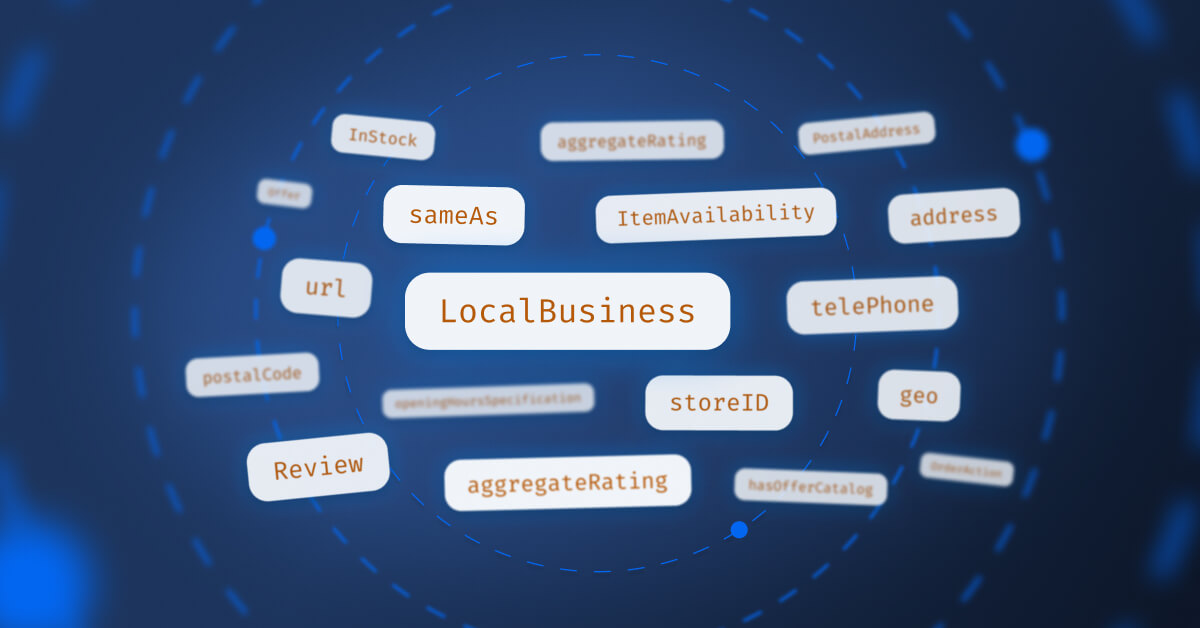
Structured data helps search engine crawlers and artificial intelligence (AI) understand web pages. It’s a…
Getting to grips with your website’s user experience (UX) is a must in today’s digital…
Did you know that 71%* of online users visit a brand’s website before popping into…
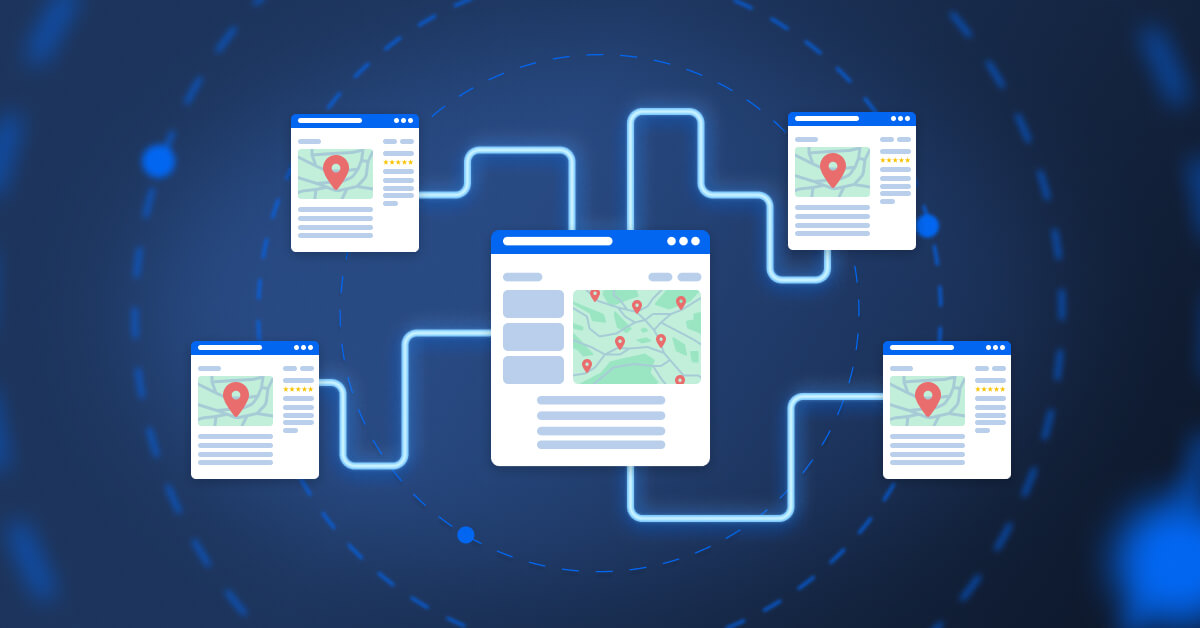
Creating local pages is one thing; linking them strategically is another matter. Without consistent internal…
A call to action (CTA) is a key part of the conversion funnel and prompts…
Receive our best articles and practical guides directly in your inbox every month