


 Help Center
 How to get help

September 16, 2026
Voice of Customer: the guide to listening and taking action with AI
Most businesses are already collecting Voice of the Customer data: Google reviews are piling up,…


Powered by Jim
Table of contents
The Voice of Customer (VoC) has long been used to measure certain KPIs: a quarterly NPS score, some satisfaction surveys, and maybe a few dashboards that head office teams analyse.
However, 2026 signals a significant shift in this marketing concept. The VoC is everywhere: in public reviews, satisfaction surveys, or even in-store interactions. These signals are numerous, dotted all over the place, and sometimes hard to interpret.
At Partoo, we’re used to tracking interactions between companies and customers on a daily basis through millions of locally collected reviews, responses, and feedback. And we’ve noted three emerging trends that are redefining how companies should structure their VoC strategy. Here’s all you need to know!
For a long time now, online reviews have been used to reassure consumers. Today, however, their role has taken on a new scope.
They now directly influence three key areas:
Review platforms, ratings, and comments left by customers create “reputation signals”: in other words, trusted public signals that influence both users and LLM algorithms.
Did you know?
The use of ChatGPT and other GenAI tools for local recommendations has increased from 6% to 45% in one year! (Source: Brightlocal)
The use of ChatGPT and other GenAI tools for local recommendations has increased from 6% to 45% in one year! (Source: Brightlocal)
This upshift has been accelerated by the rise of conversational search engines and AI assistants in local business searches. For example, when users ask,“Who is the best optician near me?” the responses generated are largely based on available public data: reviews, ratings, number of comments and overall brand perception.
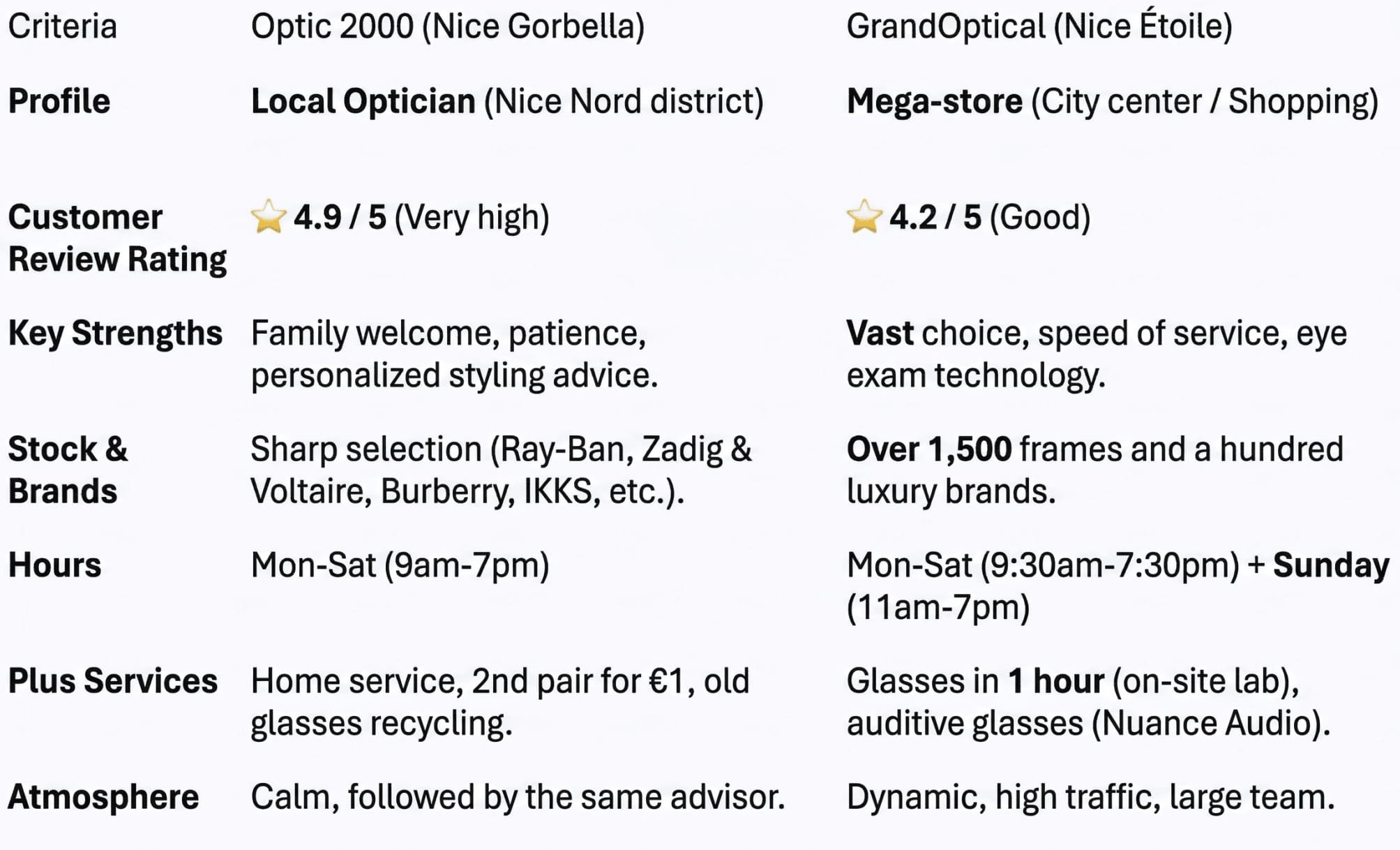
So, a company’s reputation no longer just shapes customers’ opinion; it also influences what AI understands and recommends about it.
Locally managing the VoC is more critical than ever
Local reputation management is more important than ever for companies with a network of outlets. Brand perception goes beyond a national level: it’s created by the experience delivered in every outlet!
Local reputation management is more important than ever for companies with a network of outlets. Brand perception goes beyond a national level: it’s created by the experience delivered in every outlet!
Nowadays, most companies rely on two main sources to gain customer insights.
For a long time, these two sources were treated separately: CX teams analysed satisfaction surveys, while marketing or local teams managed online reviews.
And yet they both deal with the same reality: the experiences customers have… and those customers now want to have their say!
The difference lies mainly in their function: public reviews shape the external perception of the brand and directly influence future customers’ decisions, while feedback provides an in-depth understanding of pain points and improves the operational side of things.
So, while they serve different purposes, these two aspects work in tandem. For example, a problem identified by an in-house survey may also appear in customer reviews. It will then reach the public if it hasn’t been dealt with or has merely been logged by your teams.
Companies that stay ahead of this game are now combining these data sources to get a commanding view of the customer experience.
| Criteria | Customer reviews | Feedback |
| Visibility | Audiences | Private |
| Channel | Review platforms (Google, Facebook, Tripadvisor, etc.) | Satisfaction surveys |
| KPIs | Average rating, number of reviews | NPS, CSAT |
| Main function | Shape external perception | Identify internal pain points |
Another major change is how companies use their VoC data.
For a long time, the main idea was to measure satisfaction: monitor the evolution of an NPS, analyse response rates, or produce periodic reports.
But the most successful organisations have gradually realised that scores alone don’t cut it.
The VoC’s real value lies in what is called a “continuous improvement loop”:
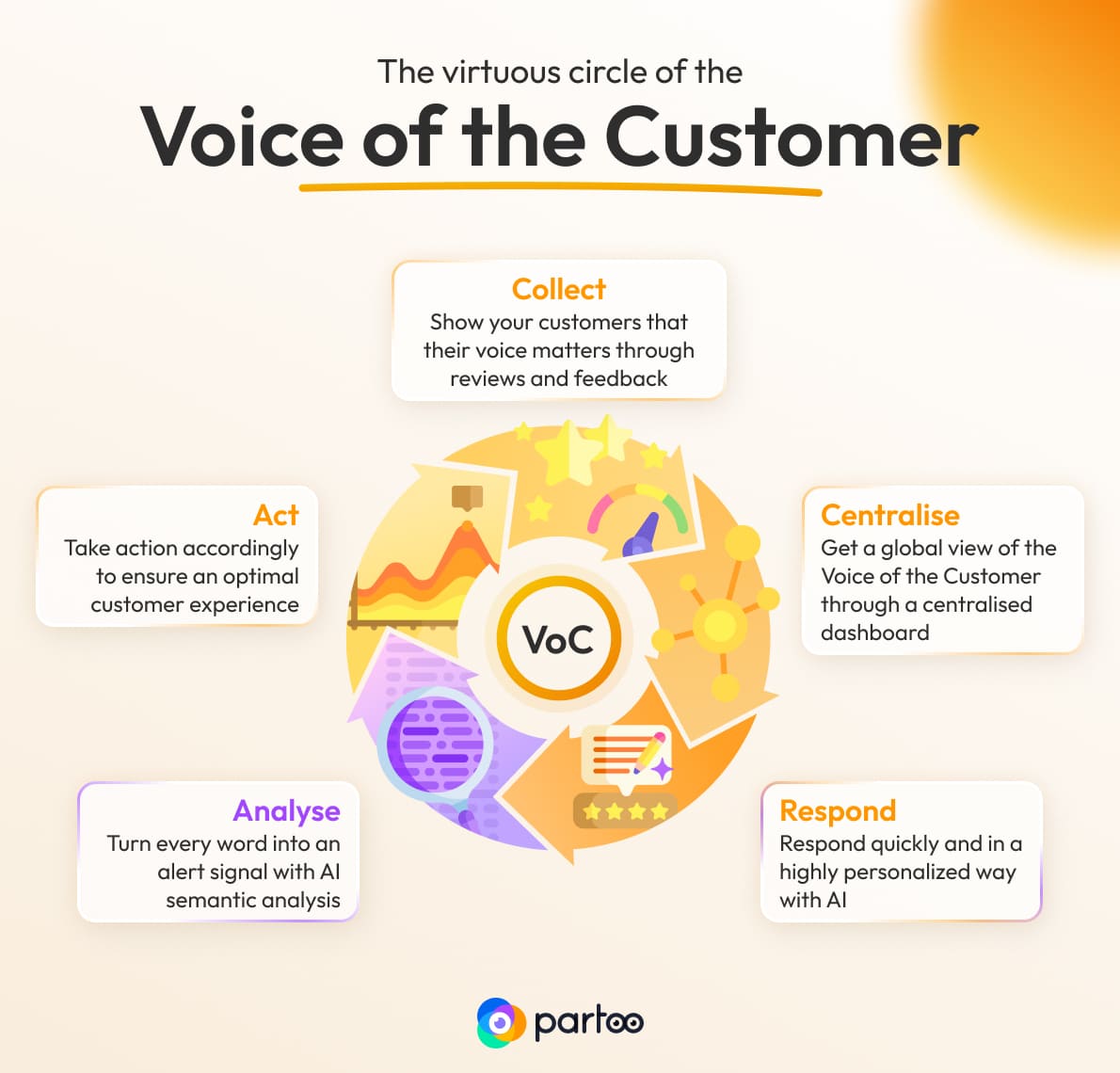
Without this loop, VoC data often remains untapped. It becomes a simple reporting tool rather than one that companies can exploit.
For networks with outlets, this approach connects insights and actions more closely to day-to-day operations. Local teams are the ones on the customer experience front line every day, so giving them access to feedback and allowing them to act swiftly is key to improvement!
The VoC is no longer just a tool for measuring satisfaction. It’s now a strategic mechanism that transforms customer signals into operational decisions.
This transformation leans on three pillars:
For companies with numerous outlets, the goal is to manage these signals at scale, while allowing local teams to act quickly.
And by doing so, the VoC stops being a simple metric, but becomes a valuable catalyst for improvement and growth!

By Partoo
Download the 2026 Barometer on online presence and e-reputation of businesses and gain practical insights to increase your chances of being cited by AI.
Transform the customer experience across your businesses with AI
Most businesses are already collecting Voice of the Customer data: Google reviews are piling up,…

While Artificial Intelligence is revolutionising plenty of things, some elements remain unchanged. The traditional stages…

A satisfaction survey sent at the right moment gets a higher response rate and more…
Receive our best articles and practical guides directly in your inbox every month