


 Help Center
 How to get help

October 22, 2026
Partoo’s Local Pack now appears in Google search results
Since 18 September 2026, Google has been displaying Partoo’s Local Pack for many local searches…


Powered by Jim

Table of contents
Most review management tools slip up big time: they treat data as if it exists in a vacuum. A score of 4.2/5 on your Google listing may seem pretty good, but it can be deceptive when viewed without market context.
Why? Because quietly, behind your back, your three main competitors have just reached an average of 4.7/5. So, without a competitive context, your rating has no value.
Here are the 5 key performance indicators that your current tool probably lacks that will turn your customer reviews into powerful growth drivers!
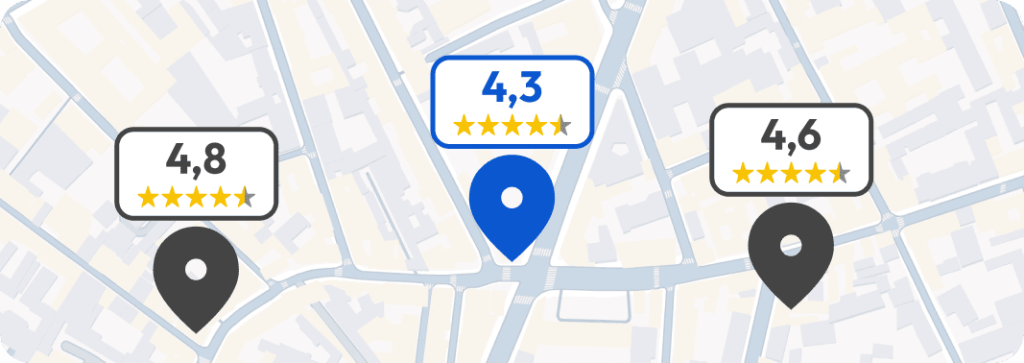
Your rating is increasing, but your customers are going elsewhere, a pattern often due to a difference in perception.
This KPI measures the difference between your average score and that of your competitors within the same catchment area. If your area’s average score is 4.5 and you stagnate at 4.2, your perception gap is -0.3.
Even if your rating seems fair, your perception gap is negative. In practical terms, this means that your company is becoming less attractive to customers in your sector and may even become their last resort.
Let’s take a concrete example: a DIY store manager in Sheffield sees their rating increase from 4.3 to 4.4. They instinctively think about improving their service and, at the same time, their customer satisfaction rate.
Yet a competitive analysis reveals that the store’s two main competitors rose from 4.0 to 4.6 and 4.8, respectively. So, despite the store’s progress, the perception gap is widening, and it’s losing its market share without understanding why.
So, as you can see, if you don’t calculate the perception gap between you and your competitors, you won’t understand what’s been going on.
The perception gap is therefore a KPI that monitors your environment, so you’re not left trailing behind the competition.

While an overall rating of 4.5/5 seems great, it can still hide major operational flaws!
This is why an effective feedback management tool must integrate a comparative “sentiment” analysis. This marker is based on an in-depth semantic analysis that determines how your customers really feel.
The tool analyses quotes from reviews to classify experiences by categories: price, welcome, cleanliness, expectations, etc. The idea is to compare your semantic data with that of your competitors.
If you “win” on the “price” side but your competitors outperform you on “the friendly staff” front, you’ll be able to immediately prioritise an area for improvement.
While a classic tool simply evaluates an average rating, sentiment benchmarking identifies exactly what customers like or dislike and applies it to both you and the competition.
This level of granularity means you can turn simple keywords into a concrete, real-world action plan!
Ready to take things to the next level?
Stop blindly managing your e-reputation. Learn how a competitive intelligence platform will help you outperform your competitors in real time.
Stop blindly managing your e-reputation. Learn how a competitive intelligence platform will help you outperform your competitors in real time.
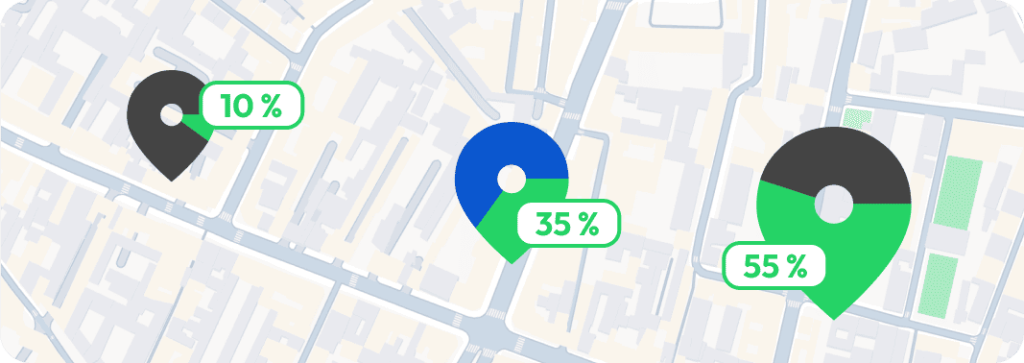
Perception gap and sentiment benchmarking are valuable KPIs, but they only tell part of the story. To dominate your local market, you need to factor in a crucial aspect: your local share of voice.
The local share of voice is a KPI that measures your business’s weight in the overall conversation (the total digital interactions) within your catchment area. More specifically, it corresponds to the percentage of reviews received by your brand compared to the total number of reviews provided in your geographical area.
Why is this vital to your online presence? Because e-reputation-wise, the number of reviews is as important as the quality of the reviews. If 100 reviews are published this month in your area and only 10 are about you, it means your competitors are getting 90% of the search engines’ attention.
In the eyes of traditional and GenAI search engines, a high share of voice sends a strong popularity and reliability signal. The bigger your digital footprint in this respect, the more crawlers will deem you a key authority, improving your search result ranking.
By actively increasing your share of voice, you’ll establish yourself as the go-to choice and organically rank higher in local recommendations.

If your number of reviews is your firepower, how quickly you respond determines your agility!
For outlets, responding quickly isn’t enough; you must respond faster than your competitors, and the responsiveness index tracks this metric. This KPI compares your average response time with that of your direct competitors.
While responding in 24 to 48 hours is considered the norm, the real benchmark is set by the competitor who reacts the fastest. If the “identical” store down the road responds in 2 hours while you take 2 days to process reviews, they will instantly come across as more active to customers. What’s more, this responsiveness index also directly influences search engine algorithms, which favour the most responsive establishments.
Faster response times signal active engagement, leading to higher search engine rankings!

Selling the best bread in town is no longer enough to be visible on Google.
A reputable bakery could be pipped to the post by a competitor with a lower rating. The reason is simple: the competitor is capturing traffic thanks to strategic keywords, such as “oven-fresh bread”, “excellent coffee”, or “homemade sandwiches” that litter its reviews and responses.
This is where visibility ranking comes into play. This KPI measures your position in Google results during a local search. It depends on your local authority, which Google evaluates according to three key criteria:
This metric determines whether you top search results or remain invisible, and is the ultimate KPI to steer your e-reputation strategy!
Precisely analysing why a competitor outranks you (higher Google rating, more reviews, more targeted semantics, or faster responses) will give you a clear roadmap to regain the top spot and, with it, the flow of customers to your store.

Are you really leading your sector? Don’t leave anything to chance. Partoo can provide you with the essential tool that tracks these 5 KPIs, letting you accurately benchmark your e-reputation against real-world performance!

By Partoo
Transform the customer experience across your businesses with AI
Download the 2026 Barometer on online presence and e-reputation of businesses and gain practical insights to increase your chances of being cited by AI.
Since 18 September 2026, Google has been displaying Partoo’s Local Pack for many local searches…
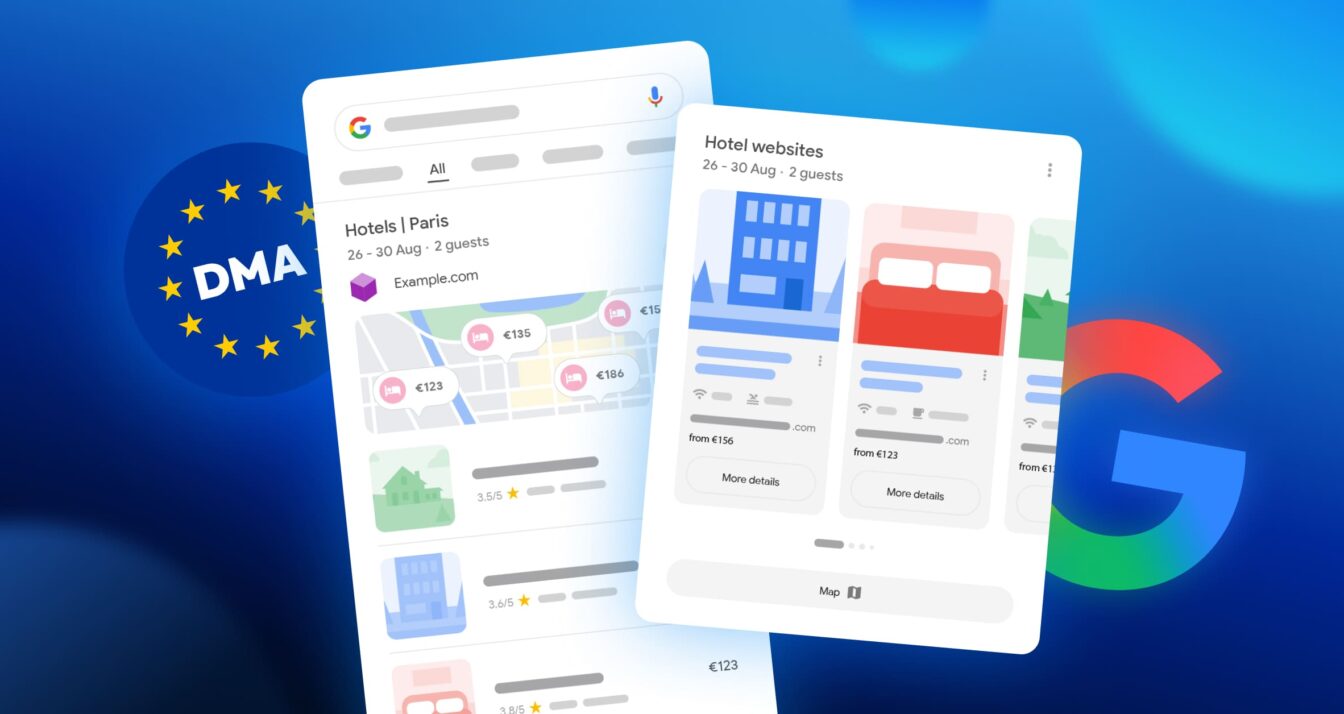
Google updated the appearance of its search results page in Europe on 8 September 2026…

Choosing the right voice of customer platform can transform how you manage CX, provided you…
Receive our best articles and practical guides directly in your inbox every month