


 Help Center
 How to get help
September 16, 2026
Voice of Customer: the guide to listening and taking action with AI
Most businesses are already collecting Voice of the Customer data: Google reviews are piling up,…


Powered by Jim
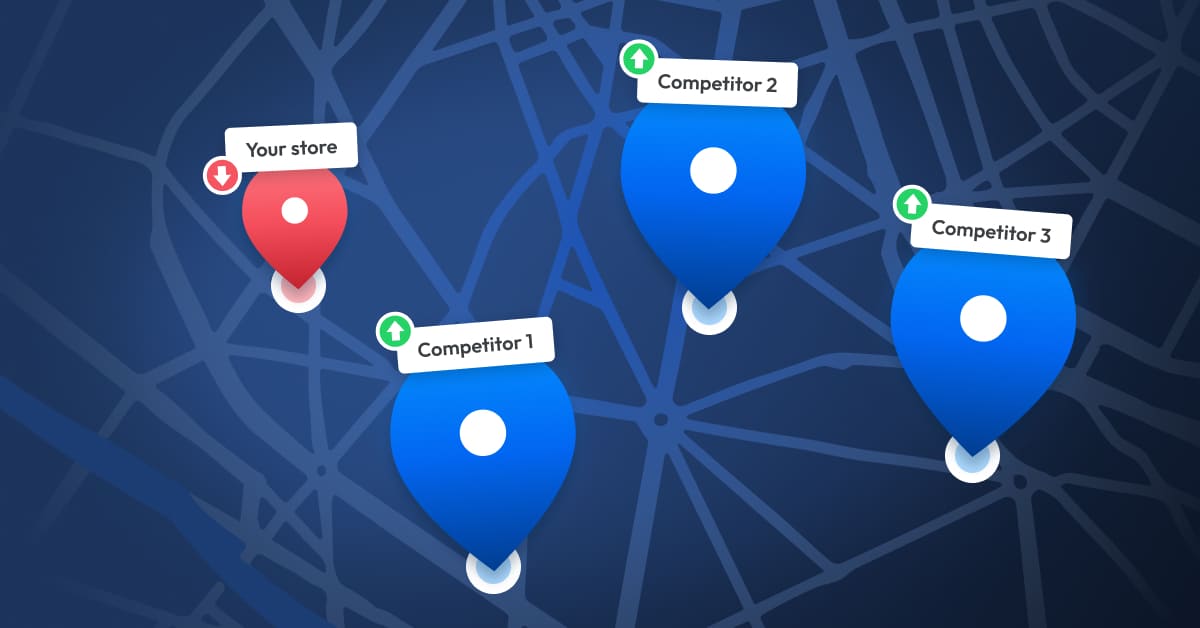
Table of contents
Your business rarely loses a customer because of one major issue. You’re more likely to lose them because a competitor is slightly better in some areas. A little more responsive, a little more visible, a little more reassuring… Taken together, these small gaps can make the difference.
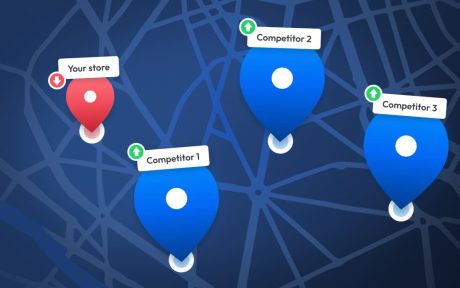
This checklist is the perfect way to find out whether your competitor is ticking more boxes than you, and by extension, whether they’re winning the “perception battle” in the eyes of both customers and AI.
Explore the 8 points to check in your reviews and your competitors’ reviews to build the strongest local e-reputation possible. Let’s get started!
Has your competitor received a review in the last 48 hours?
If so, this is sending a clear signal to AI and internet users saying the competitor is active, is attracting customers, and is relevant, even nowadays.”
By contrast, if your latest review is a month old, or more, your business may start to look progressively absent.
… even with better ratings than the competitors!
For customers, and even more so for AI, freshness is often more convincing than perfection.
A competitor whose reviews contain clear signals is more likely to be recommended, even with a lower rating. Look closely at the wording used in your competitors’ reviews: what are customers actually saying?
Are they using precise phrases such as:
These words reflect a positive or negative customer perception, based on a real in-store experience. They are crucial for AI, which uses them to understand, categorise and recommend a business.
Find out more about semantic analysis of competitors’ reviews
Discover how to analyse the content of your competitors’ reviews in depth, to identify their real strengths and their weaknesses.
Discover how to analyse the content of your competitors’ reviews in depth, to identify their real strengths and their weaknesses.
Does your competitor respond to 100% of their reviews? What about you?
A high response rate sends a strong message: this company is attentive, engaged and interested in the clients’ experience.
Ignoring reviews, especially negative ones, gives the opposite impression.
And that signal is clearly visible to both users and AI. So, it’s better to show that you consider customer experience a priority, by replying to every review, without exception!
Replying is good. But replying in a personalised way is even better!
Take these two examples of replies to a positive review:
The second one builds trust. It shows genuine consideration for the customer, for their review and their actual experience, rather than sounding like a mechanical reply copied across every positive review.
Generic replies do little for AI algorithms. Personalised responses, on the other hand, significantly strengthen credibility. If your competitor replies quickly and in a personalised way, they maximise their chances of being mentioned by AI, instead of your business.
Now take a look at the photos posted by your competitor’s customers.
Are they:
Photos play a direct role in the consumer’s decision-making process. Before they even read the reviews, images are often what catches the eye and shapes a first impression of the place or product. Plenty of recent, authentic visuals build trust and make a business more attractive, which can be enough to tip the balance.
Photos posted by customers themselves, known as UGC for User-Generated Content, often have even more impact than professional visuals. They’re seen as more credible, more spontaneous and therefore more reassuring. AI also loves taking UGC into account when making recommendations!
This effect is even stronger when the photos are recent: an authentic picture taken yesterday can be far more valuable than a flawless photoshoot from two years ago. It proves that the experience still lives up to expectations today.
If your competitors benefit from high-quality, regularly updated customer photos, it can directly influence their ability to attract new customers… potentially at your expense!
So, when asking customers to leave a review, explicitly encourage them to add a photo. It’s a simple but extremely powerful way to strengthen your appeal.

How does your competitor respond to bad 1-star reviews? This is often where everything is decided.
A professional, empathetic and constructive reply has a strong chance of mitigating criticism and turning a poor experience into a strong proof of seriousness.
Negative reviews are never pleasant to receive, but they can sometimes be more powerful than positive ones: reassuring for future customers, and also valuable for AI, which will not fail to recognise excellent handling of negative feedback.
Do customers mention staff members by name in your competitors’ reviews?
Don’t underestimate the power of specific mentions: “Thank you Lisa for your professionalism” or “Kamel was incredibly efficient” send a very strong positive signal.
These reviews reflect a remarkable human experience, which is a powerful driver of loyalty. A customer who builds a connection with one of your competitor’s employees is much less likely to choose your business next time!
So make sure your team delivers the best customer experience, to maximise your chances of receiving positive reviews, that mention your staff by name.
Does your competitor receive more reviews than you, per month?
Even with a slightly lower rating, a high review volume can be a sign of:
AI often prefers businesses with a steady stream of recent reviews. That makes it essential for your business to request them regularly from customers!
Time to take stock!
If your competitor outperforms you on at least 5 out of the 8 points of this checklist, you might have to reconsider your business strategies. Your problems are not necessarily concerning the quality of your service, but rather the perception of your clients or prospects. None of these factors is highly decisive on its own, but together they create a major competitive advantage.
The challenge? Analysing these 8 points for every business, of every competitor, every single week and manually, that’s a full-time job. And yet, it’s exactly what would help you understand:
Want to turn your insights into action?
Request a custom demo now and learn how Competitive Intelligence can boost your network strategy.


By Partoo
Download the 2026 Barometer on online presence and e-reputation of businesses and gain practical insights to increase your chances of being cited by AI.
Most businesses are already collecting Voice of the Customer data: Google reviews are piling up,…

While Artificial Intelligence is revolutionising plenty of things, some elements remain unchanged. The traditional stages…
A satisfaction survey sent at the right moment gets a higher response rate and more…
Receive our best articles and practical guides directly in your inbox every month