


 Help Center
 How to get help
October 1, 2026
Comparison sites, providers… What Google’s new search layout means for you
Google updated the appearance of its search results page in Europe on 8 September 2026…


Powered by Jim
Table of contents
Google updated the appearance of its search results page in Europe on 8 September 2026 to comply with an enforcement decision under the Digital Markets Act (DMA). What does this change actually mean for local searches and business networks? Here’s what you need to know.
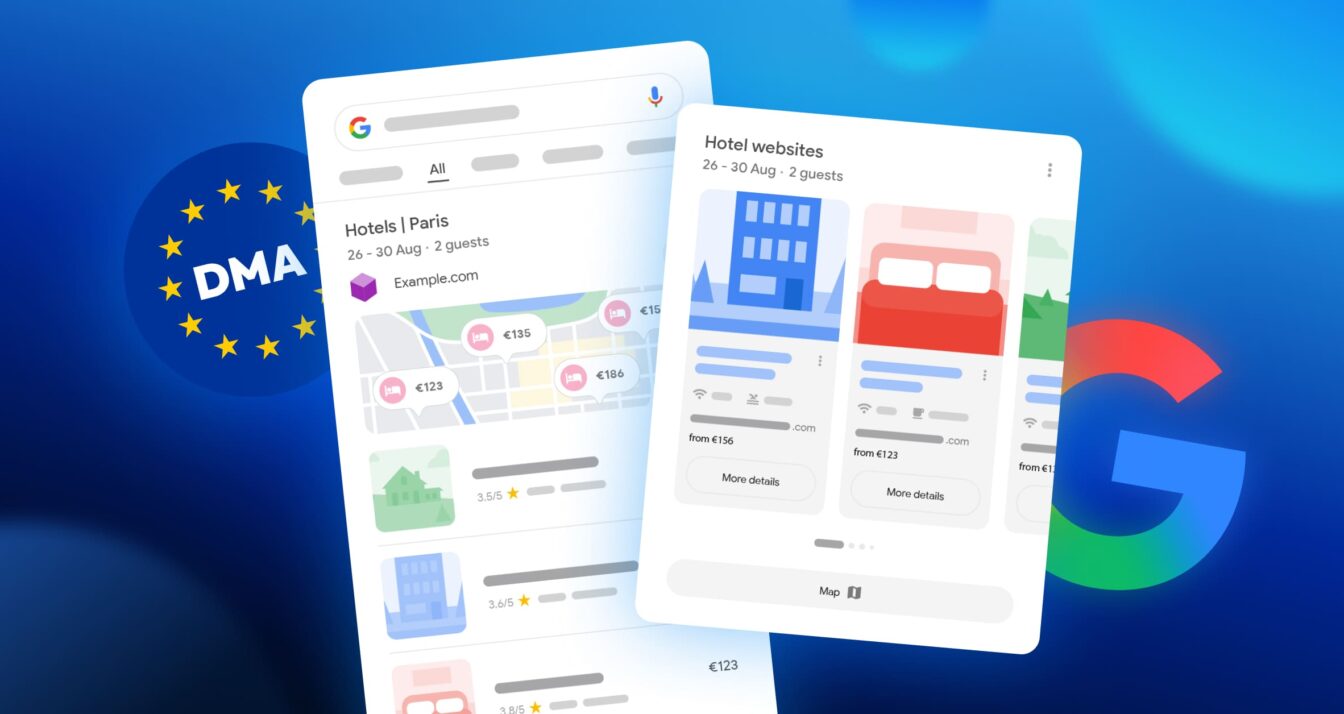
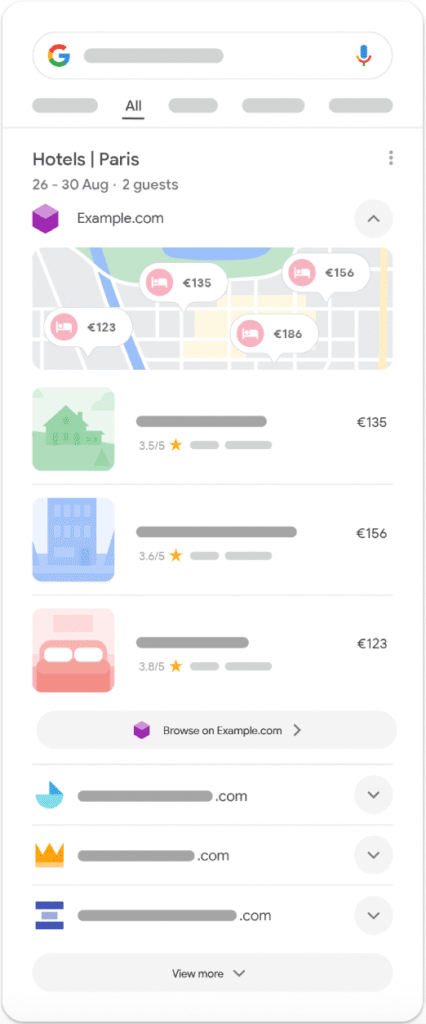
Two new sections have appeared on the search results page for European users: one reserved for comparison sites and directories (the aggregator unit), and another for businesses that sell their services directly (the supplier unit), which only appears alongside the former.
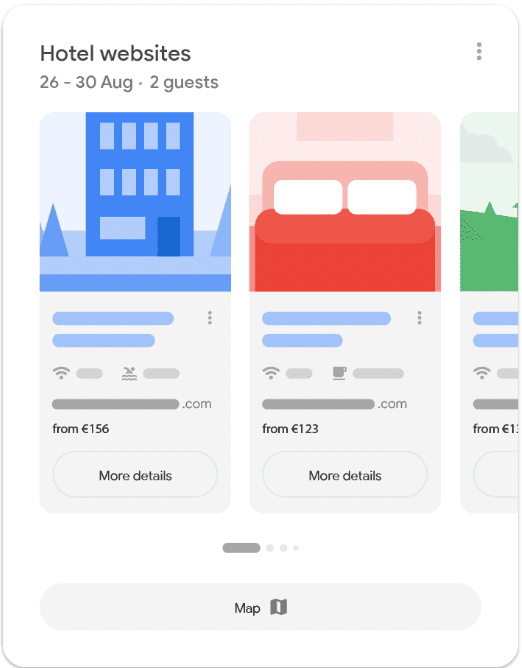
For now, this new system appears to apply to four types of search:
In practice, for a query such as “hotels nearby”, a comparison site (Google Travel, Booking, Expedia, etc.) appears at the top of the results, with photos, prices and reviews. Other comparison sites are grouped in a drop-down list. Below this, the supplier unit gives visibility to businesses that sell their services directly — an individual hotel, for example, rather than a comparison site. It only appears when the aggregator unit is also displayed.
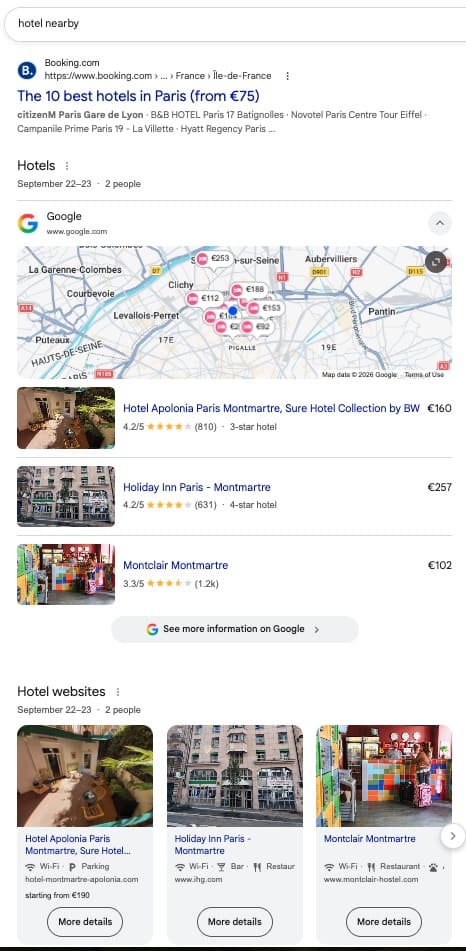
While searches for local businesses do not appear to be affected at this stage, this new layout could gradually be extended to other search categories. The change introduced on 8 September applies across 30 markets: the European Union, Iceland, Liechtenstein and Norway.
Unsurprisingly, Google strongly opposes these new requirements. Nick Fox, SVP of Knowledge & Information at Google, says the changes are “favouring online intermediaries over local businesses and getting rid of helpful features that users rely on every day”. This reaction is rooted in the regulatory context behind this change.
This latest development is part of a longer story. The DMA aims to limit the market power of the largest digital platforms — the “gatekeepers”, including Alphabet, Amazon, Apple, ByteDance, Meta and Microsoft — by preventing them from favouring their own services over those of their competitors.
This is precisely what led the European Commission to fine Google €460 million on 23 July 2026 for favouring its own results in the Shopping, hotels, transport and sports categories. Google was then given 60 days to comply, with potential penalties of up to 5% of its worldwide turnover. The changes introduced on 8 September are therefore a response to that deadline.
Want to learn more about the DMA?
At Partoo, we already covered these compliance changes in 2024, when the “Places sites” section appeared above the traditional Local Pack. Read our full article on the impact of the DMA on local SEO for a detailed look at these changes and what they could mean.
At Partoo, we already covered these compliance changes in 2024, when the “Places sites” section appeared above the traditional Local Pack. Read our full article on the impact of the DMA on local SEO for a detailed look at these changes and what they could mean.
Our analysis remains the same as in 2024: these developments are worth monitoring closely, but they should not be overinterpreted. For now, the official rollout of 8 September is limited to four categories and Google Maps isn’t affected. That said, several signs suggest a similar approach is starting to crop up in local searches such as restaurants and supermarkets (see below).
However, while Google Business Profile (formerly Google My Business) remains a crucial source of information for local visibility, it is now more important than ever to distribute complete, structured, reliable and up-to-date local data across multiple platforms.
If the logic behind this new system were extended to local search, having a structured online presence distributed across multiple channels would leave you better equipped for this kind of change in the SERPs.
The official rollout of 8 September only covers four categories for now. Even so, several observations suggest a similar approach is starting to appear in local searches such as restaurants and supermarkets.
In a restaurant search, an “Addresses” block powered by Uber Eats now shows its own selection of places, with ratings, prices and opening hours, much like an aggregator. In a supermarket search, the same block can show several data providers side by side (Uber Eats, Deliveroo, Google), each with its own list of addresses.
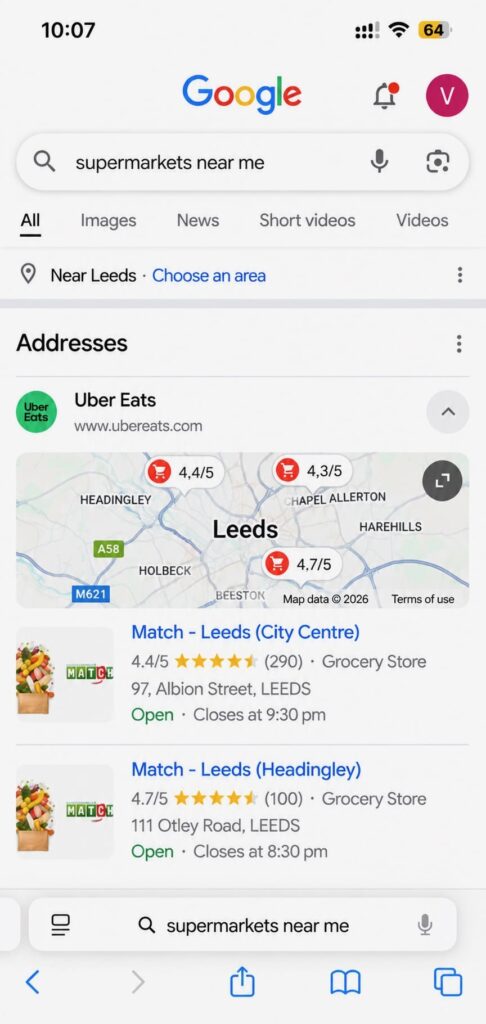
At this stage, Google hasn’t made this change official, and it doesn’t apply to every local search. It seems to be focused on categories where delivery or booking platforms naturally compete with Google. Still, it shows that aggregation units are no longer limited to hotels, flights, trains and products. For local businesses, it’s one to keep a close eye on.
In its documentation, Google is explicit about what sets a business that appears in the aggregator unit apart from one that does not: the richness and freshness of its data. Several criteria stand out:
In other words, Google is asking for the same thing with every new format: structured, complete and continuously synchronised data, distributed wherever the algorithm looks for it.
This is precisely why distributing business information across multiple platforms matters, rather than simply optimising your Google Business Profile. The more consistent and up-to-date your data is across all the channels that feed these systems, the better equipped you are to withstand changes to SERP layouts, whatever form they may take.
Presence Management
The supplier unit, which appears alongside the aggregator unit, is explicitly open to “brick-and-mortar business owners”. Google describes it as being designed for direct providers, such as individual hotels or airlines.
This is where a Store Locator really comes into its own. As a structured, crawlable web page, it provides an entry point that Google can explore to identify each business as a direct provider.
For a multi-business network, having a complete, up-to-date and well-structured Store Locator is therefore no longer just about internal linking or user experience. It also puts you in a stronger position if this approach is extended beyond hotels, transport and products.
Partoo helps you roll out an effective Store Locator!

Guide customers to the right business with optimised local pages
Learn the secrets to effective Google Business Profile optimisation.
Google updated the appearance of its search results page in Europe on 8 September 2026…

Choosing the right voice of customer platform can transform how you manage CX, provided you…

Most businesses are already collecting Voice of the Customer data: Google reviews are piling up,…
Receive our best articles and practical guides directly in your inbox every month