



 Help Center
 How to get help
All you need to know about GEO
Table of contents
The rise of conversational AI has given birth to a new strategy: GEO (Generative Engine Optimisation). Unlike traditional SEO, which aims to improve the visibility of sites on search engine results pages, GEO optimises your content so it’s selected, processed, and displayed by artificial intelligence.
Learn how GEO is redefining how businesses should enhance their online presence and how to stay one step ahead!
What is GEO?
GEO refers to the practical ways you can ensure your online content is displayed and ranked by GenAI search engines. While Google used to display a list of links, these new LLMs generate tailored responses. So, the challenge with GEO is no longer about just being seen, but to be systematically cited and recommended by AI.
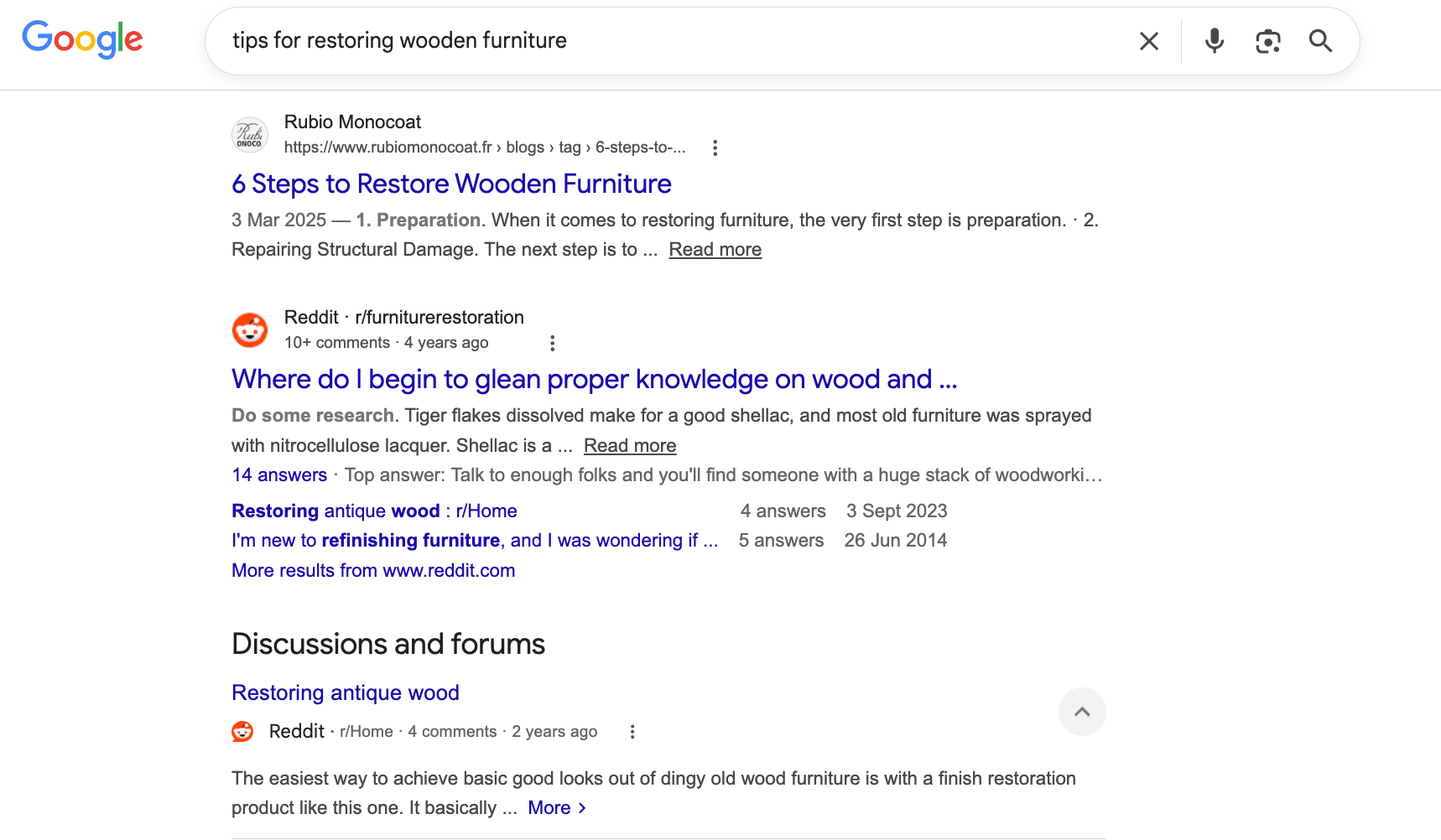
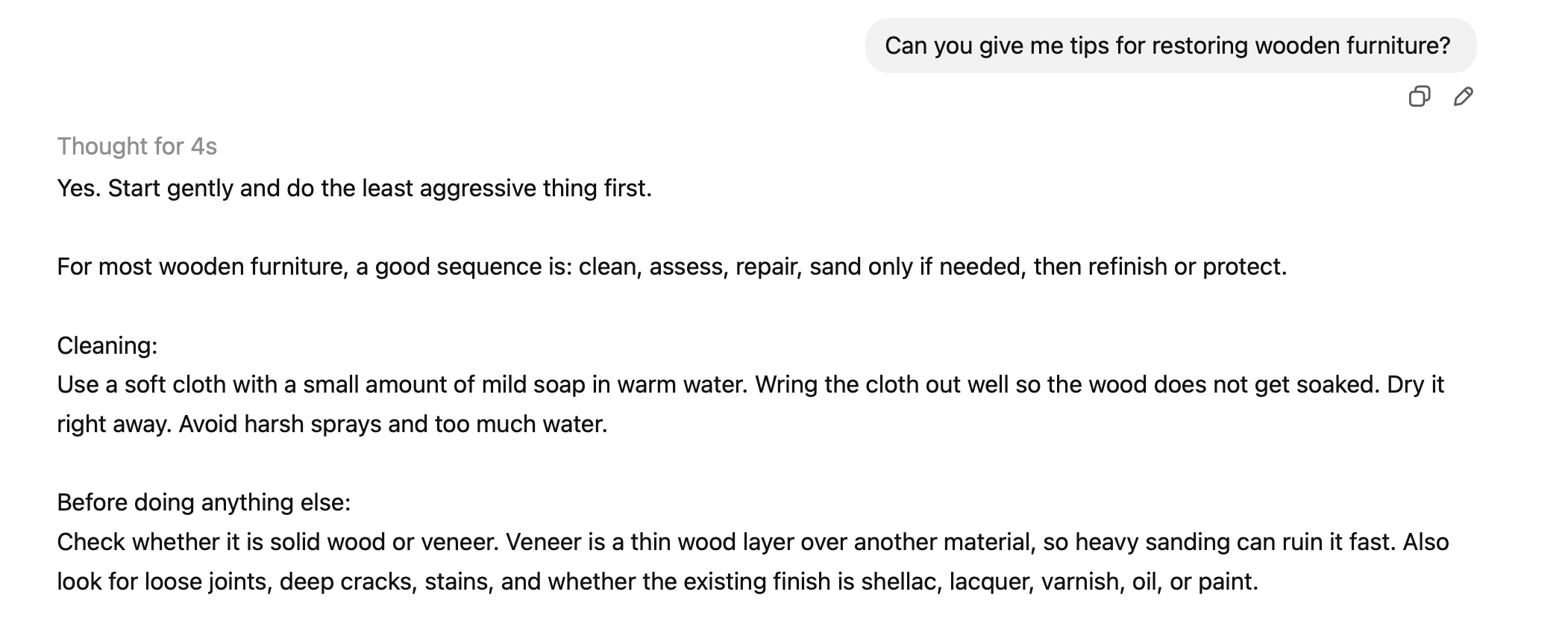
With the arrival of AI and large language models, online users have changed their search habits. When a user looks for information using an AI search engine (for example, “tips for restoring wooden furniture”), these tools won’t just provide a list of links but generate snippets based on information drawn from multiple sources.
When replying to such queries, AI will collect information from various digital media:
- a company’s website, including its Store Locator,
- Google Business Profile listing and its customer reviews,
- social networks,
- trusted third-party platforms (like Trustpilot, TripAdvisor, etc.).

GEO is coming to Google
Google has recently rolled out AI Overviews in numerous countries. It’s a block of AI-generated content that appears at the top of search results pages.
Google has recently rolled out AI Overviews in numerous countries. It’s a block of AI-generated content that appears at the top of search results pages.
What’s the difference between SEO and GEO?
While SEO strategies have ruled online marketing for yonks, the emergence of AI is changing how companies are chosen and ranked. If you’re wondering whether generative search engines use the same criteria as conventional SEO, well, the answer isn’t straightforward. Although these two approaches share similarities, they rely on distinct underlying logics.
Fine-tuning your SEO is nevertheless still crucial to improving your ranking with traditional and GenAI search engines.
Here is a summary of the key differences between SEO and GEO.
| SEO (Search Engine Optimisation) | GEO (Generative Engine Optimisation) | |
| Aim | Appear in the organic results produced by traditional search engines (Google, Bing, etc.) | Become the cited source in an AI-generated responses |
| Main techniques | Page optimisation, keyword positioning, backlinks, domain authority, etc. | Use of structured data (such as schema tags), FAQs, reliable and objective data, quotes, etc. |
| Key Performance Indicators (KPIs) | Organic traffic, average ranking, CTR (click-through rate) | Citation rate, presence in AI Overviews |
| Format | Search engine results page (SERP) | AI-generated snippet |
| Query example | “men’s size 43 marathon trainers” | “Show me a selection of size 43 trainers suitable for a marathon” |
| Platforms | Traditional search engines: Google, Bing, Yahoo, etc. | GenAI platforms: Gemini, ChatGPT, Perplexity, Copilot, etc. |
What are the main pillars of GEO?
If you want the main LLMs like ChatGPT or Gemini to select your company or services, your content must meet specific structure and credibility criteria.
1. Qualitative semantic content
Content remains the central pillar of any GEO strategy. Unlike keyword-centric SEO, content for GEO is designed to answer users’ real-world questions in a direct, clear, and contextualised way.
It’s no longer just about ranking for queries, but conversationally satisfying user search intents. To do this, your website and other digital media, such as your Google listing, need quality content that includes informative articles.
Here are some best practices for structuring your content:
- Use natural, customer-friendly language on your site, for example, “where to get your bike repaired quickly in London SW3” rather than “London SW3 bike repair”.
- Anticipate questions by answering the main question, but also the logical questions that may follow. For example, after explaining where a customer can get their bike repaired, specify the average price, pickup times, or whether the repair shop repairs e-bikes.
- Meticulously structure information with well-defined text (H1, H2, H3), short paragraphs, bullet point lists, and simple definitions that AI will find easy to use.
2. Technical content that AI can easily read
If AI can’t easily read your content, it won’t cite you. This is why the technical performance of a site influences whether it will appear in GenAI responses. Even if your content is relevant and reliable, it can still be hard for AI to access it (long loading time, poor HTML structure, lack of markups), meaning it will be overlooked.
Some of the invaluable good practices are:
- Using structured data by tagging your site with Schema.org Markup (FAQs, articles, products) will make it easier for generative engines to interpret key elements.
- Ensuring fast loading speed by optimising files, limiting scripts, and activating caching so that content is instantly displayed and, therefore, AI crawler-friendly.
- Optimising your site to be responsive and mobile-first because a readable and functional site across all media increases the chances of appearing in AI results.
3. Including EEAT content (Experience, Expertise, Authoritativeness, Trustworthiness)
AI only cites what it deems reliable. Google’s EEAT principle is therefore crucial. It’s not just about producing well-written content; you must demonstrate first-hand experience, recognised expertise, industry authority, and trustworthiness.

Definition
EEAT is a concept created by Google that evaluates the quality and relevance of a page or website.
EEAT is a concept created by Google that evaluates the quality and relevance of a page or website.
GEO-wise, these are elements that ensure a source’s credibility in the eyes of AI and justify its selection as a reliable reference.
Best practices for EEAT content are as follows:
- Standardise your content across the web (website, local listing, etc.) to strengthen your brand’s reliability and authority.
- Highlight social proof by integrating case studies, testimonials, customer reviews, and certifications.
- Be transparent in your “about us” pages and provide clear legal notices that reassure GenAI algorithms.
How to optimise your content for the local GEO?
Local GEO refers to optimising your online presence so AIs will recommend your brick-and-mortar establishments for geolocated queries, such as “find a sports store near me that’s open now”.
To optimise it, you’ll need to nurture your online presence on digital platforms that AI consults, such as your Google listings or Store Locators.
Regularly complete and update your Google Business Profile listings
Your listings are not just directories; they are a go-to database for AI. To be AI-ready, make sure each field is filled in carefully (address, opening hours, services, and categories, for example). A complete and up-to-date listing increases your chances of appearing in AI responses.
Integrate a Store Locator on your website
According to a study*, 40% of the sources displayed in SearchGPT come from a Store Locator or websites. Essential for local SEO, a Store Locator will also boost your local GEO.
A Store Locator is a mapping solution integrated into a website that geolocates your outlets. It lets users quickly find a nearby establishment while providing them with essential information (address, opening hours, services offered, etc.).
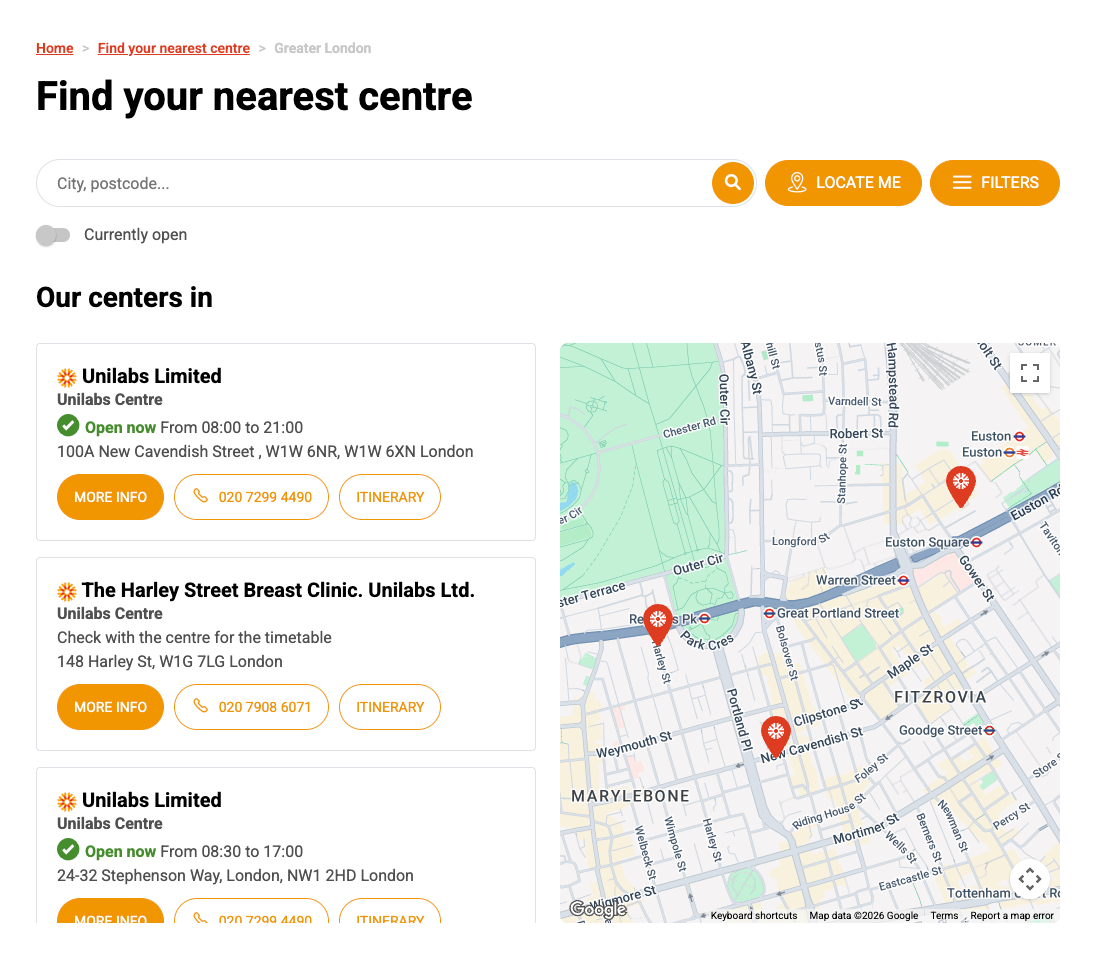
The integration of structured data makes a Store Locator a powerful SEO tool. By optimising its pages, you’ll be giving AI structured and easy-to-understand content so it can recommend your company’s outlets.
Partoo helps you roll out an effective Store Locator!
- Increase traffic and visits to your business
- Centralise all your business data
- Improve your visibility on both traditional and AI-powered search engines

GEO is not a replacement for SEO, but rather a logical extension. By combining a traditional technical structure with AI-ready content and an optimised store locator, you’ll ensure your business is not only listed, but also tops recommendations!
*Sources: “Comment apparaître sur ChatGPT pour les recherches locales ? (Etude)” by Local Ranker, 08/2025

By Partoo
The local customer experience platform built for your network
Transform the customer experience across your businesses with AI
Subscribe to our newsletter
Receive our best articles and practical guides directly in your inbox every month