


 Help Center
 How to get help

September 16, 2026
Voice of Customer: the guide to listening and taking action with AI
Most businesses are already collecting Voice of the Customer data: Google reviews are piling up,…


Powered by Jim

Table of contents
With Black Friday, Cyber Monday, and Christmas fast approaching, the end-of-year events are just around the corner. This is a crucial time for businesses, which record significant growth in their online sales during this period. But this year, more than ever, artificial intelligence is heavily influencing how users search the web. Discover with Partoo how AI is revolutionising online shopping and how to leverage it!
Traditionally, searching for information or products online is done using specific keywords. For example, a parent preparing for the holidays might type: “Christmas gift idea for a four-year-old.” The search engine then offers a list of links that they must explore to find what suits them.
Today, with the arrival of LLMs and conversational agents, new search habits have emerged. Queries have become longer, transitioning from a simple list of keywords to a dialogue in natural language: the search has become conversational. Users’ queries are therefore much more complete, but also more complex.
Let’s revisit the Christmas shopping example, but this time with an AI. Instead of scrolling through pages of links, the user can initiate a dialogue such as: “I’m looking for a Christmas gift idea for a four-year-old, he likes construction games, and we have a budget of around 50 euros.” With this level of detail, the AI agent scans content in real-time, evaluates products, checks the price, and selects the options that perfectly match all these criteria.
Among the best-known conversational agents, ChatGPT, Gemini, and Perplexity already offer this type of response. Furthermore, Google has integrated AI features into its search engine, such as AI Mode or AI Overviews, which provide users with synthesised and relevant answers directly on the results pages.
As the famous adage says: “a picture is worth a thousand words.” A quote that is entirely relevant here, as some queries can be difficult to describe.
Thanks to visual search, the internet user no longer needs words; they use an image to find what they are looking for.
This is what Google offers with Google Lens. By sharing an image on the tool or using their smartphone’s camera, the AI can identify plants, a festive dish in a photo, or a decorative object while providing detailed information.
To complement this functionality, Google launched Circle to Search, an AI tool that allows users to select a specific area on an image by circling it on their screen. This way, one can target a precise element, for example, a handbag in a photo, to immediately find where to buy it online.

Innovation goes even further with Google Search Live, which allows the user to perform a real-time search by combining the camera, voice, and artificial intelligence. With Search Live, the AI analyses the live video to immediately respond to the user’s query.
platforms are specialising in shopping functionalities. This marks a significant advance in e-commerce because these tools are ultimately intended to host direct transactions.
AI giants like OpenAI, Google, and Perplexity are therefore developing their own shopping features. Among the most advanced is Shopping GPT (integrated directly into ChatGPT).
This AI functionality is capable of searching for, comparing, and purchasing products without leaving the conversational agent interface. Products are presented in carousels, including:
AI News
Since September 2025, ChatGPT has developed Instant Checkout, a feature that allows users to make online purchases directly from ChatGPT without having to leave the interface. This feature is currently only available in the United States and is limited to purchases on a few e-commerce sites.
Since September 2025, ChatGPT has developed Instant Checkout, a feature that allows users to make online purchases directly from ChatGPT without having to leave the interface. This feature is currently only available in the United States and is limited to purchases on a few e-commerce sites.
To ensure your products and services are selected by the AI and presented to your future customers during this busy period, here are three strategic actions to implement.
To provide the internet user with the most reliable and relevant results possible, AI relies on data from across the web. This information is collected through websites, Google Business Profiles, customer reviews, online directories, etc. Once this information is gathered, the AI processes and synthesises it before using it in its responses.
For the AI to choose your content, it must therefore be:
Well-optimised content across all your communication channels will help you stand out in the many user searches during this end-of-year period.aidera à ressortir dans les nombreuses recherches des internautes en cette période de fin d’année.
Warning
Conversely, if your content lacks coherence or structure, the AI might misinterpret it and propagate incorrect data, which could harm your business.
Conversely, if your content lacks coherence or structure, the AI might misinterpret it and propagate incorrect data, which could harm your business.
AI increasingly integrates user experience (UX) as a key criterion in its ranking algorithms. UX refers to the quality of the interaction experienced by the user on a website. This takes into account both ease of use (navigation, performance, etc.) and the user’s general feeling.
To offer a satisfactory experience, you must:
For e-merchants with physical establishments, AI can simplify the search for information about points of sale, which can encourage the customer to go directly to the store to finalise their purchase.
Let’s return to our example: the parent has found the perfect game for their child on your site. They want to check its quality in-store before buying it immediately. This is where AI plays a key role by sharing the address of the nearest point of sale, the product’s availability, and even its price, provided you supply this data.
To feed the AI with precise data and allow it to suggest your points of sale in its results, the presence of a Store Locator on your site is an interesting solution.
A Store Locator is an interactive interface, integrated into your website, which allows for the geolocation of your physical points of sale. Each page dedicated to an establishment must imperatively share key information such as the address, products or services, opening hours, specific attributes, and available stock.
Now you know everything about how AI is revolutionising online shopping in 2025.

Content manager
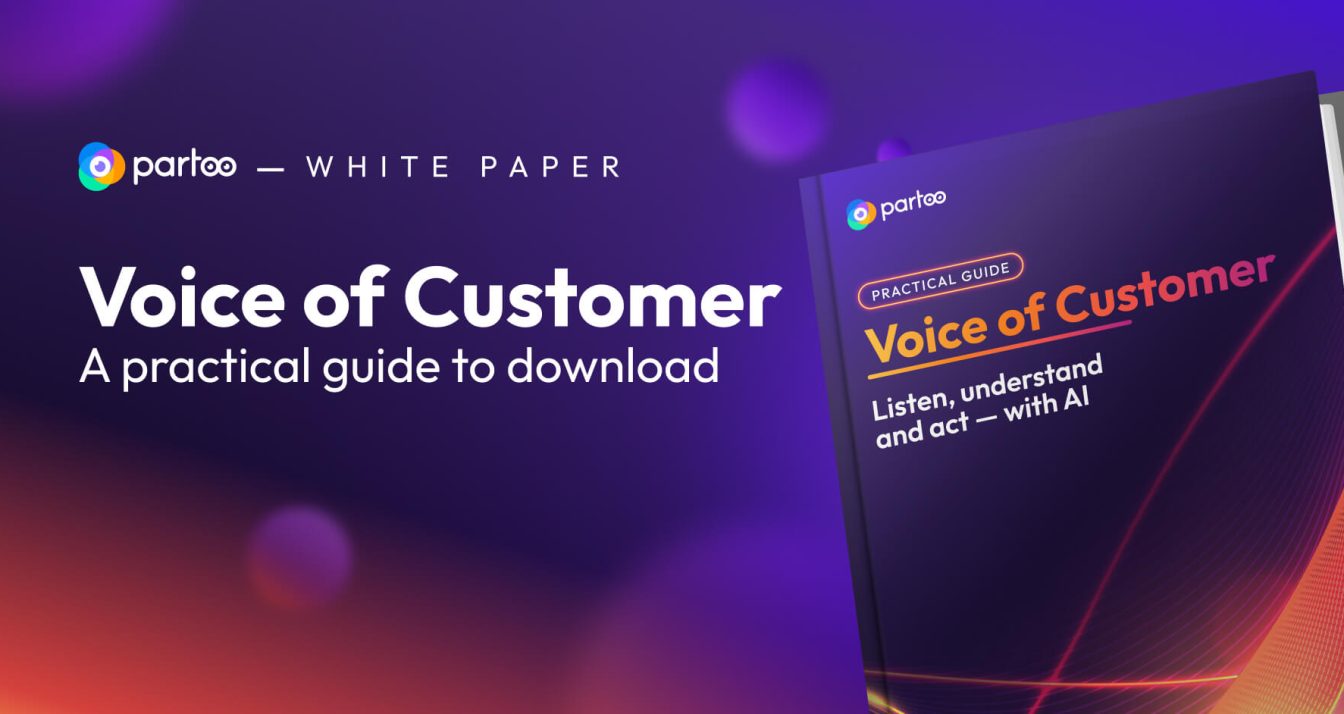
Download our free guide and discover how AI is reshaping local search, online reputation, and conversational commerce!
Visibility, reputation, customer interactions: the first agentic platform for all your businesses
Most businesses are already collecting Voice of the Customer data: Google reviews are piling up,…

While Artificial Intelligence is revolutionising plenty of things, some elements remain unchanged. The traditional stages…

A satisfaction survey sent at the right moment gets a higher response rate and more…
Receive our best articles and practical guides directly in your inbox every month