


 Help Center
 How to get help

November 16, 2026
ChatGPT launches its Business Hub, but not (yet) outside the US
On 10 November 2026, OpenAI announced the launch of Businesses in ChatGPT. The programme comes…


Discover our all-in-one Voice of Customer offering
 Partoo
Written by Partoo
Table of contents
Long reduced to a map dotted with ‘pins’, the store locator has become a strategic gateway for multi-location networks. It now serves two audiences: internet users looking for the nearest business, and the search engines, maps, and generative AI engines that use its data to answer local queries.
So the question is no longer whether your network of businesses needs a store locator, but how to roll it out. Should you hand the project over to an agency and have it custom-built, or rely on a ready-to-use SaaS solution? Timescales, costs, autonomy, and SEO performance: this guide walks you through everything you need to make the right choice!
Before comparing them, it is important to distinguish between the two models. They meet different needs and come with different budgets and delivery timescales.
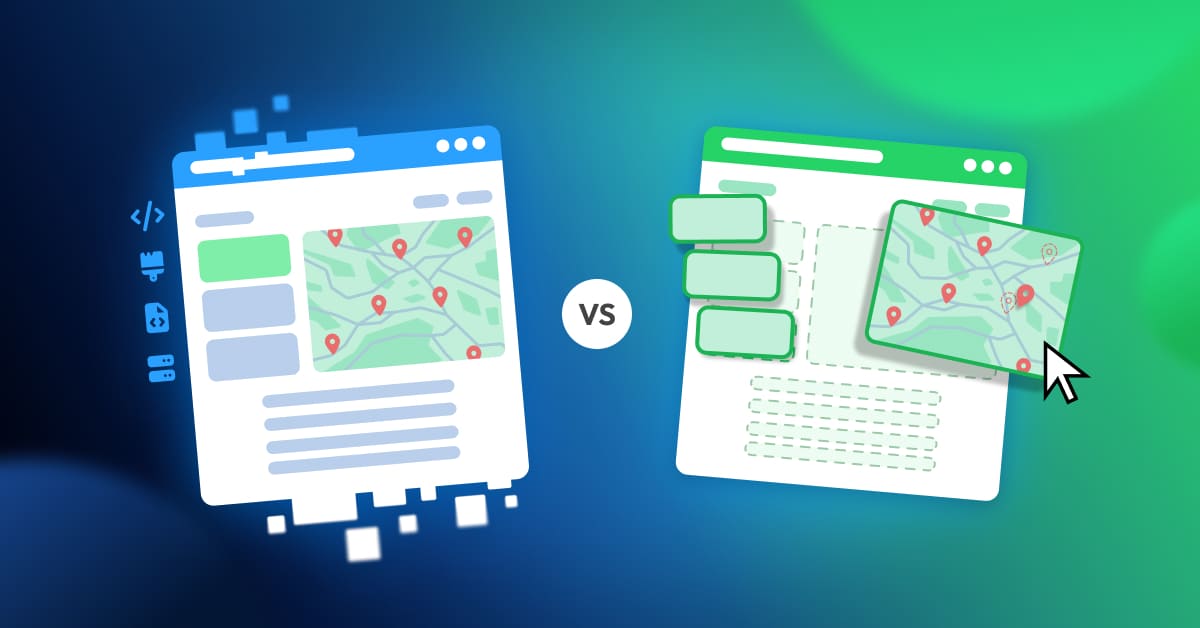
A bespoke store locator is designed and developed specifically for the network, usually by a web agency, and sometimes as one building block of a broader website project. The design is entirely up to you, but the project follows a traditional cycle: scoping, mock-ups, development, testing, and go-live. Once it has been delivered, every change requires a new quote.
A SaaS store locator is a ready-to-use solution, hosted and maintained by the software provider on a dedicated subdomain of your website (for example, stores.yourbrand.com). The network customises its look and feel (logo, favicon, font, colours), builds its local pages from ready-made sections, and takes it live on its own. Business data is synchronised automatically from the local presence management platform.
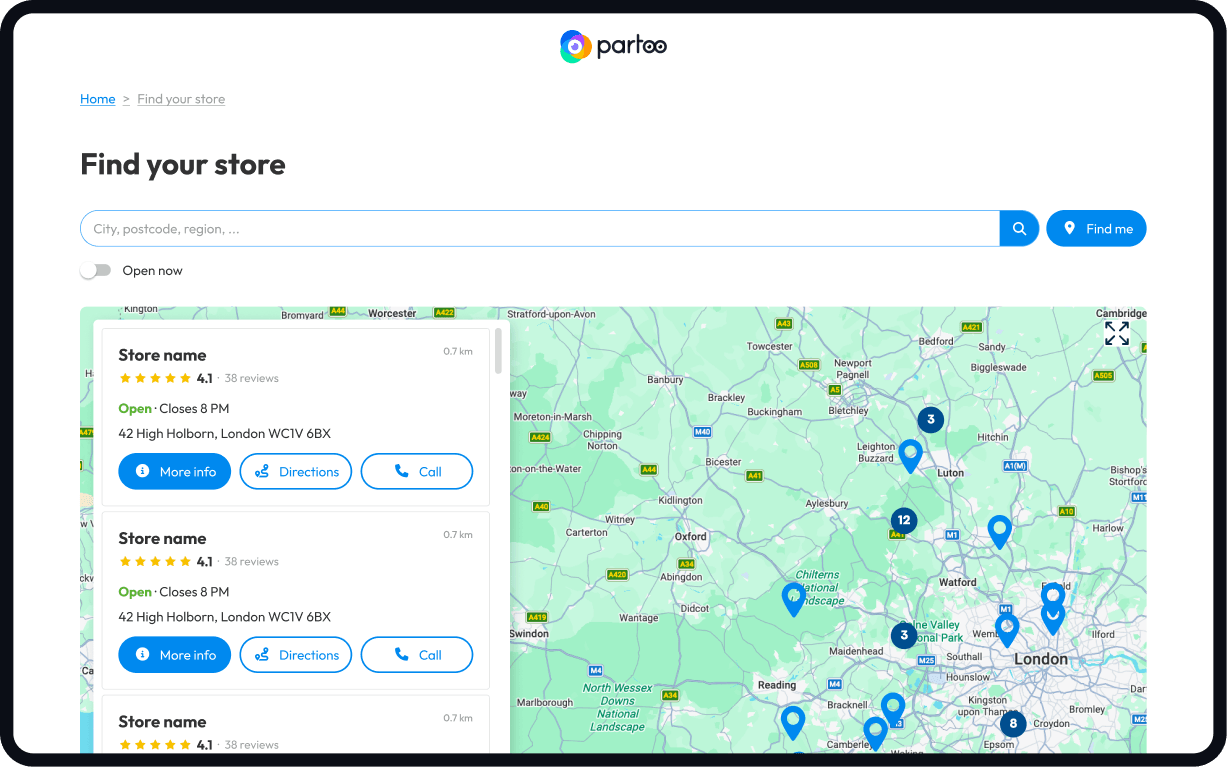
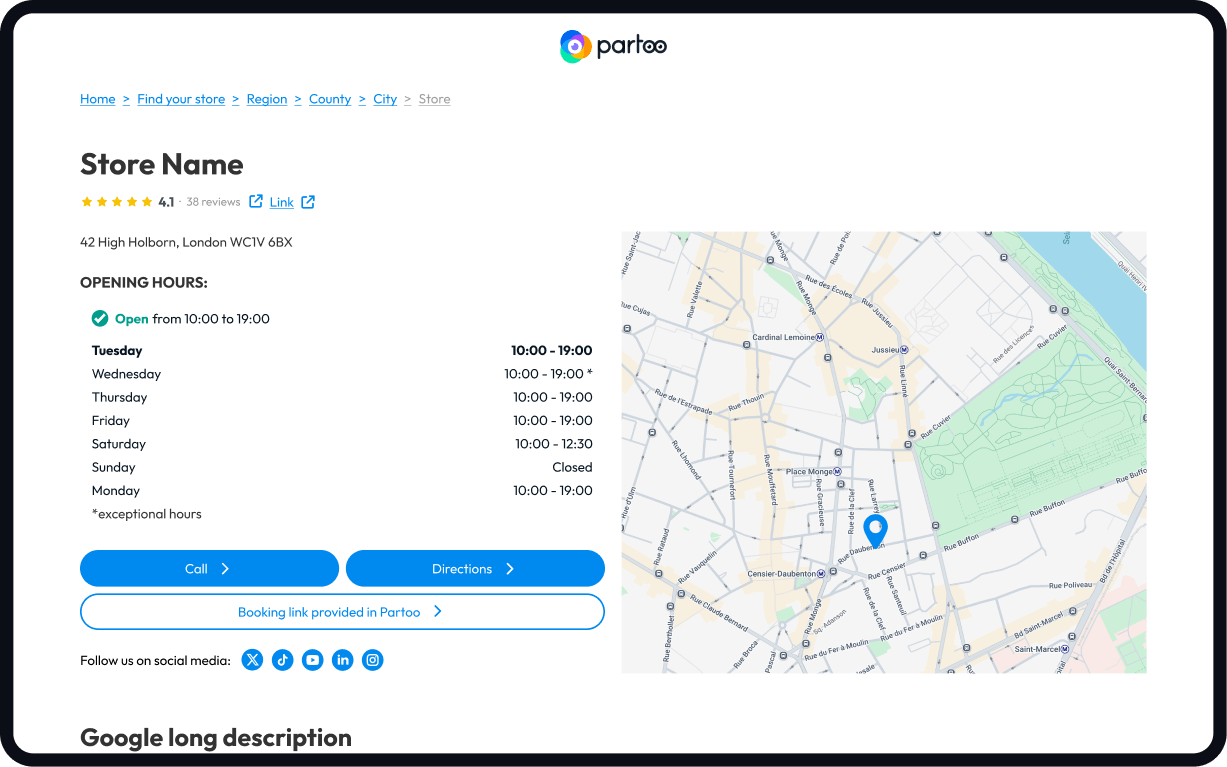
Partoo helps you roll out an effective Store Locator!

Choosing a store locator is about more than comparing two quotes. The right option depends first and foremost on your network and your resources. A few questions will help you define your needs:
The more openings, closures, and changes to opening hours there are, the heavier the day-to-day burden of keeping data up to date.
A team with no developers on hand has every reason to want a store locator it can update on its own, without going through an external provider.
Your answers already point you towards a choice: the larger and faster-changing your network, and the fewer technical resources your teams have, the more sense a ready-to-use solution makes.
Once you have set this framework, three criteria will help you decide between bespoke and SaaS: time to go live, total cost over several years, and the store locator’s performance, which also depends on how much autonomy it gives your teams.
This is the first difference, and the most visible one. A bespoke store locator takes 3 to 6 months on average to go live. This timeframe comes down to the stages involved in a bespoke project: specifications, back-and-forth on mock-ups, development, integrating each business’s data, and testing.
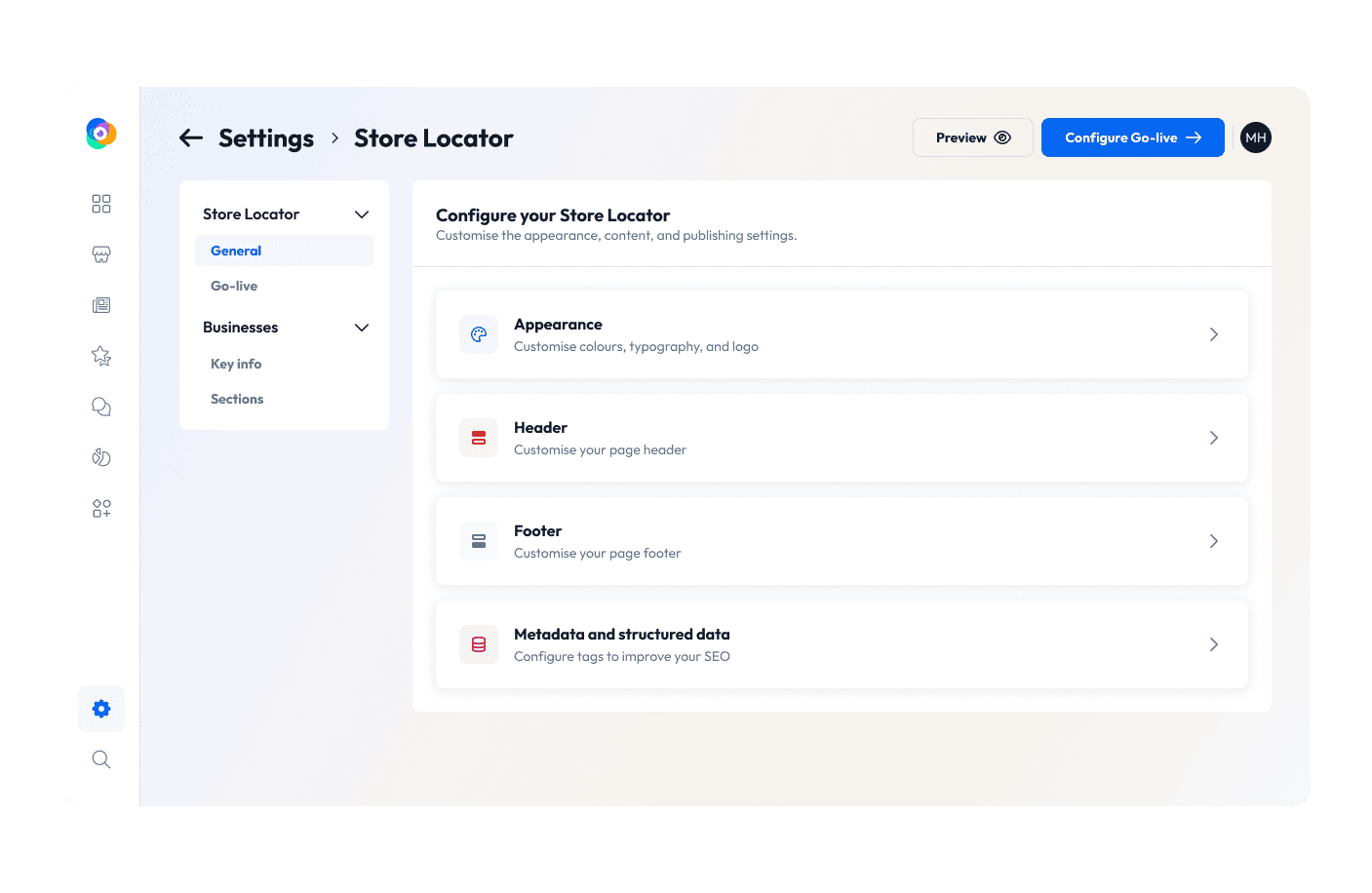
A SaaS store locator removes most of these stages. The page architecture, technical SEO, and data migration are already in place. Setup boils down to four steps that marketing teams can complete on their own:
Setup and go-live can then be completed in less than a day, after which the store locator is published automatically.
The months you save make a real difference. Every month without optimised business pages means local searches such as ‘service + city’ are benefiting your competitors.
The cost of a store locator goes beyond building it. To compare the options, you need to think in terms of total cost over several years.
An agency project involves a range of profiles (project manager, designer, and developers) over several months, and the bill reflects that. SaaS spreads these costs across all of the solution’s clients and runs on an annual subscription, usually based on the number of businesses.
This is where the gap widens. An agency-built store locator is delivered once, then frozen. Every change (a new section, updated brand guidelines, a new business) has to go through the agency. To keep up with the requirements of Google and AI engines, a technical overhaul is often needed every 1 to 2 years.
With SaaS, maintenance and new features are included. The platform evolves continuously, with no technical debt and a guaranteed level of security.
The hidden cost: your teams’ time
Updating opening hours, temporary closures, or promotions store by store quickly becomes unmanageable beyond a handful of businesses. Automatic synchronisation means no more re-entering data, and none of the errors that come with it!
Updating opening hours, temporary closures, or promotions store by store quickly becomes unmanageable beyond a handful of businesses. Automatic synchronisation means no more re-entering data, and none of the errors that come with it!
A store locator is only valuable if it gets found and converts. On both counts, the SaaS model has structural advantages.
For a generalist agency, the store locator is often just one block in an overall website project, and is rarely optimised for local SEO. A specialist SaaS store locator builds in best practices from the outset:
An agency store locator is a separate website, often synchronised manually with Google Business Profile (formerly Google My Business). Discrepancies in opening hours or addresses soon build up. A SaaS solution connected to a local presence management platform distributes every update in a single click: store locator, Google, social media…
Presence Management
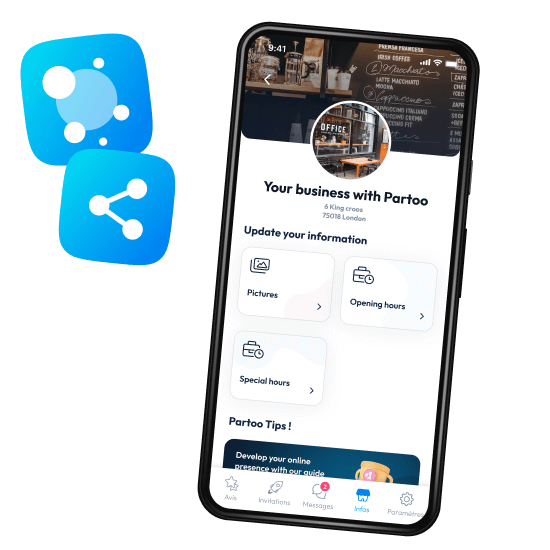
Business pages are also enriched with no need to re-enter anything: descriptions, services, photos, posts, and customer reviews are fed in automatically from the local presence management platform.
Design, business page sections, local content… With the SaaS model, marketing teams manage everything from a single interface, with no development work and no tickets to an agency. Some SaaS store locators, such as Partoo’s Store Locator Studio, also let you split roles between head office and individual businesses. This way, head office keeps control of brand consistency, while local teams enrich their pages with what makes each location unique.
| Criterion | Bespoke store locator | SaaS store locator |
|---|---|---|
| Time to go live | 3 to 6 months | Setup and go-live possible in under 1 day |
| Cost structure | High initial investment, followed by hidden costs: changes charged on a quote basis, overhaul every 1 to 2 years | Predictable annual subscription, with maintenance and updates included |
| Changes | Through the provider, on a quote basis | 100% autonomous |
| Technical updates | Overhaul every 1 to 2 years | Continuous, with no technical debt |
| Maintenance and security | Additional cost | Included, with no delays |
| Local SEO/GEO | Varies by provider, often a secondary consideration | Built in (POI pages, schema.org, internal linking) |
| Data synchronisation | Often manual | Automatic |
| Customisation | Full | Logo, favicon, colours, Google Fonts, up to 25 sections |
SaaS covers the vast majority of needs, but not all of them. If you absolutely must use a font outside Google Fonts, replicate a custom header, or implement highly specific business rules, a bespoke version may be the right option (provided you are willing to accept the longer timescales).
In that case, your choice of provider matters. Some specialist software providers, including Partoo, offer a bespoke store locator connected to their platform. This means you keep automatic data synchronisation and local SEO expertise, which a generalist agency does not always have.
Bespoke or SaaS: both approaches lead to a store locator, but not at the same pace or the same price. For most networks, SaaS ticks all the essential boxes: going live in a few days instead of 3 to 6 months, controlled costs, always up-to-date data, and built-in local SEO. A bespoke store locator, on the other hand, may be the better choice when you face very specific technical constraints.
By Partoo
Boost your local SEO and GEO by publishing your businesses’ information across all the platforms that matter
Find out whether your business listings are fully optimised in just a few clicks!
On 10 November 2026, OpenAI announced the launch of Businesses in ChatGPT. The programme comes…
Long reduced to a map dotted with ‘pins’, the store locator has become a strategic…
Since late September 2026, Google has been recording up to 80% fewer Search views for…
Receive our best articles and practical guides directly in your inbox every month