


 Help Center
 How to get help

October 22, 2026
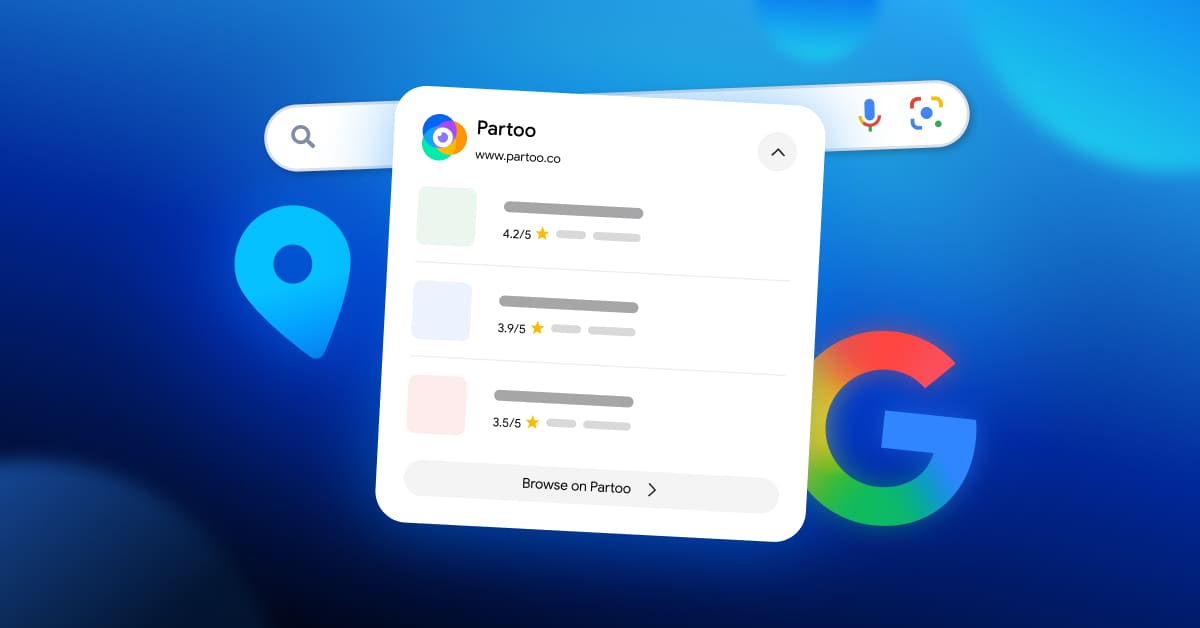
Partoo’s Local Pack now appears in Google search results
Since 18 September 2026, Google has been displaying Partoo’s Local Pack for many local searches…


Powered by Jim
Table of contents
The authenticity of customer reviews is fundamental to local SEO. Without it, trust breaks down — among users, but also with Google itself. The way Google’s search engine works rests on a simple premise: a review must reflect a genuine, honest, lived experience.
Yet the temptation to cherry-pick which comments get published can be hard to resist. That’s what review gating is. Google has recently tightened its official rules on prohibited content — and the penalty is severe: waves of mass review removals for businesses that play with fire.
So what are the risks, and how can you collect reviews in a 100% compliant way? Here’s everything you need to know.
Definition
Review gating consists of filtering customers in advance to encourage positive reviews and discourage, or even block, negative ones.
Review gating consists of filtering customers in advance to encourage positive reviews and discourage, or even block, negative ones.
Here are the most common ways this practice appears:
For Google, even if the link to your listing technically remains accessible at the end of the process, any artificial friction created to hide dissatisfaction is considered review gating.
As far back as 2018, Google officially asked businesses not to “discourage or prohibit negative reviews, or selectively solicit positive reviews from customers.”
In 2022, the web giant went one step further by adding this rule to its “fake engagement” section on prohibited content, officially taking a stance against review gating.
Why such a strict approach? Because Google’s algorithm depends on the reliability of its data. If users can no longer trust business ratings:
Review gating isn’t illegal in the criminal sense, but it directly violates Google’s Terms of Service — and the consequences sting.
The main risk is the temporary or permanent suspension of your Google Business listing. For a local business or a network of outlets, disappearing from Google Maps and local search results means a drastic loss of visibility and an immediate hit to revenue.
In short: it’s simply not worth it.
Recurring waves of review removals
In September 2024 and again in February 2025, Google carried out large-scale removals of reviews suspected of being fake — causing serious damage to the many businesses involved.
In September 2024 and again in February 2025, Google carried out large-scale removals of reviews suspected of being fake — causing serious damage to the many businesses involved.
The key to getting it right comes down to one word: transparency. To steer clear of review gating while still strengthening your online reputation, here are four golden rules to follow:
At Partoo, our position is clear: we are firmly against review gating and any form of rating manipulation.
Businesses and retail networks using our Review Booster solution to automate their review collection can be confident that they are fully aligned with Google’s guidelines.
The reviews collected will be a faithful reflection of the customer experience.
No business is perfect — and consumers know that. By opening the door to honest feedback, you’ll improve your customer service, strengthen your credibility, and ultimately drive sustainable growth in your local SEO score.

By Partoo
Transform the customer experience across your businesses with AI
Download the 2026 Barometer on online presence and e-reputation of businesses and gain practical insights to increase your chances of being cited by AI.
Since 18 September 2026, Google has been displaying Partoo’s Local Pack for many local searches…

Google updated the appearance of its search results page in Europe on 8 September 2026…

Choosing the right voice of customer platform can transform how you manage CX, provided you…
Receive our best articles and practical guides directly in your inbox every month