


 Help Center
 How to get help
October 22, 2026
Partoo’s Local Pack now appears in Google search results
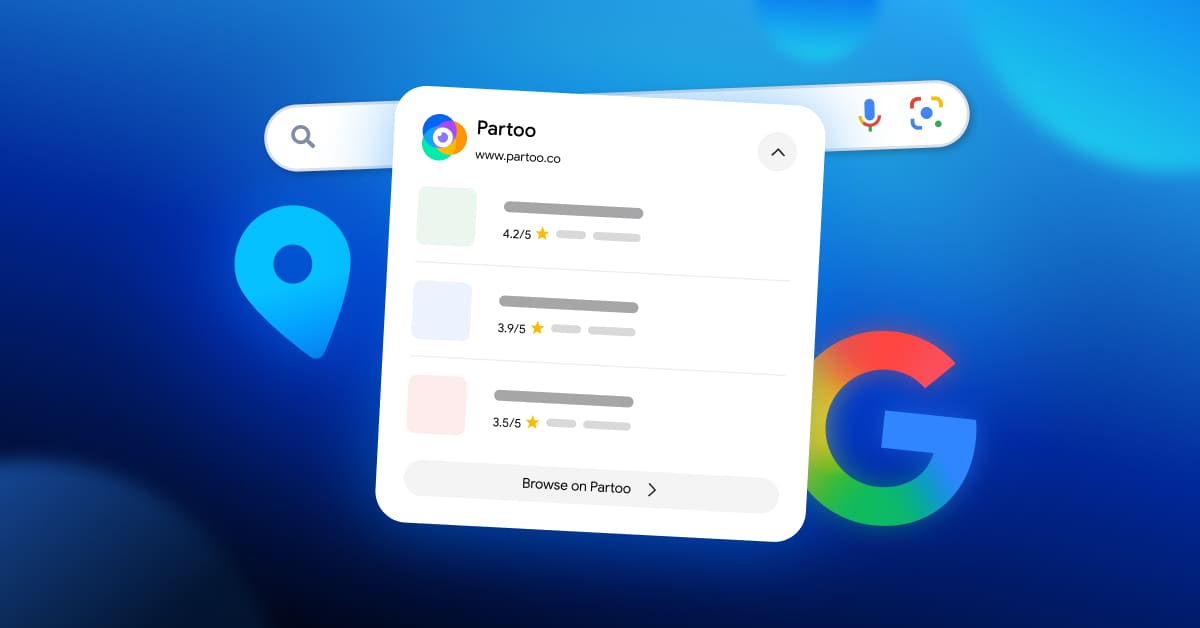
Since 18 September 2026, Google has been displaying Partoo’s Local Pack for many local searches…


Powered by Jim
Table of contents
In the hospitality industry, the battle to grab a guest’s or holidaymaker’s attention begins long before they walk through your door, and it all starts on Google.
Incomplete listing, missing attributes, outdated photos… These are all signals that will push a potential customer to choose the competition. On the other hand, a well-optimised Google listing is a powerful lever to improve visibility, generate direct bookings, and top the list in new GenAI search results.
Partoo tells you all you need to know!
Unlike the Google listings for restaurants or convenience stores, hotel ones have exclusive features that make them a powerful conversion tool.
In fact, Google Business Profile has developed a specific ecosystem for the hotel industry, designed to meet the expectations of travellers who are bound to compare all the available options.
The striking difference? A guest can start their booking process directly on the hotel’s Google listing. Two mechanisms make this possible:
Glossary
An OTA (Online Travel Agency) is a web platform that groups tourism businesses (hotels, self-catering accommodation, airlines, car hire, etc.). Popular ones include Booking.com, Expedia, TripAdvisor, Hotels.com…
An OTA (Online Travel Agency) is a web platform that groups tourism businesses (hotels, self-catering accommodation, airlines, car hire, etc.). Popular ones include Booking.com, Expedia, TripAdvisor, Hotels.com…
This price comparison, displayed on the listing or in the SERPs, means a hotel can improve its online presence and increase bookings. User-wise, guests benefit from a speedy way to compare what’s on offer.

In addition to basic information (opening hours, address, phone number), Google lets hotels add detailed attributes that will significantly improve their listing.
These attributes are wide-ranging: check-in and check-out times, on-site services (breakfast included, brunch, heated pool, spa…), facilities (gym, treadmill, EV charging station…), or languages spoken by the staff.
A wealth of useful information so guests can see if the establishment has what they’re after at a glance… And all that without having to trawl through a hotel’s website!

But listing these attributes does more than provide practical info. Attributes also work as a listing’s keywords. When a user searches for “hotel with heated pool Aberdeen” or “hotel with Sunday brunch”, Google will crawl attribute data when choosing relevant establishments. So, the more complete a listing is, the better it ranks.
And this is why adding attributes isn’t an option, but a priority!
Having a Google listing is a good start. Optimising it is even better!
Here are practical ways to power up your hotel’s online presence.
This is the single most essential prerequisite. Before selecting attributes or uploading photos, make sure the listing’s basic info is accurate, complete, and the same across all online platforms: Google, TripAdvisor, your hotel’s website, etc. This is called NAP (Name, Address, Phone number) consistency.
If the address, phone number, or opening hours are inaccurate, or don’t match on every platform, you’ll send Google a negative signal and sow doubt in the mind of travellers checking out your establishment. On the other hand, consistent and up-to-date information improves the establishment’s credibility in the eyes of both algorithms and potential guests.
Basic info aside, choosing the right main and secondary categories is another critical element. Correctly categorising your establishment (“hotel”, “B&B”, “youth hostel”, etc.) means Google will understand exactly what you’re offering and display you in relevant search results.
As mentioned, your attributes are a powerful visibility lever. But make sure you include them all and keep them updated!
However, if you’re a hotel chain, keeping on top of this can quickly become a nightmare. Updating attributes, listing-by-listing, hotel-by-hotel, can be a soul-destroying and time-consuming task for teams.
Fortunately, Partoo has a solution for the bulk management of hotel attributes. Using a single dashboard, you can now modify your entire portfolio’s attributes in minutes, using configurable access permissions according to levels in the organisation, meaning each local team keeps control of their particular establishment.
Another super-useful feature is the “Exceptional” status. Unlike standard attributes that only allow “Yes”/”No”/ “Not defined”, Partoo hotel attributes let you indicate if a service is temporary or available under certain conditions: brunch only on Sundays, swimming pool under renovation, a spa open according to the season…
This means you can be precise and won’t mislead guests.

The decision-making power of online reviews affects the hotel industry more than any other sector. A traveller choosing between two similar hotels will almost always go for the one with the highest rating, the best reviews, and the most polished replies.
There are two ways to keep on top of this: encourage happy guests to leave a review (via a post-stay email, with a QR code available at the reception desk…) and then reply to each review, whether it’s positive or negative. Giving negative reviews a professional and understanding reply will reassure future guests more than a 5-star rating with no comments.
Google also factors in the number and recency of reviews in its local ranking algorithm. So, actively collecting reviews will affect your e-reputation as much as your ranking.
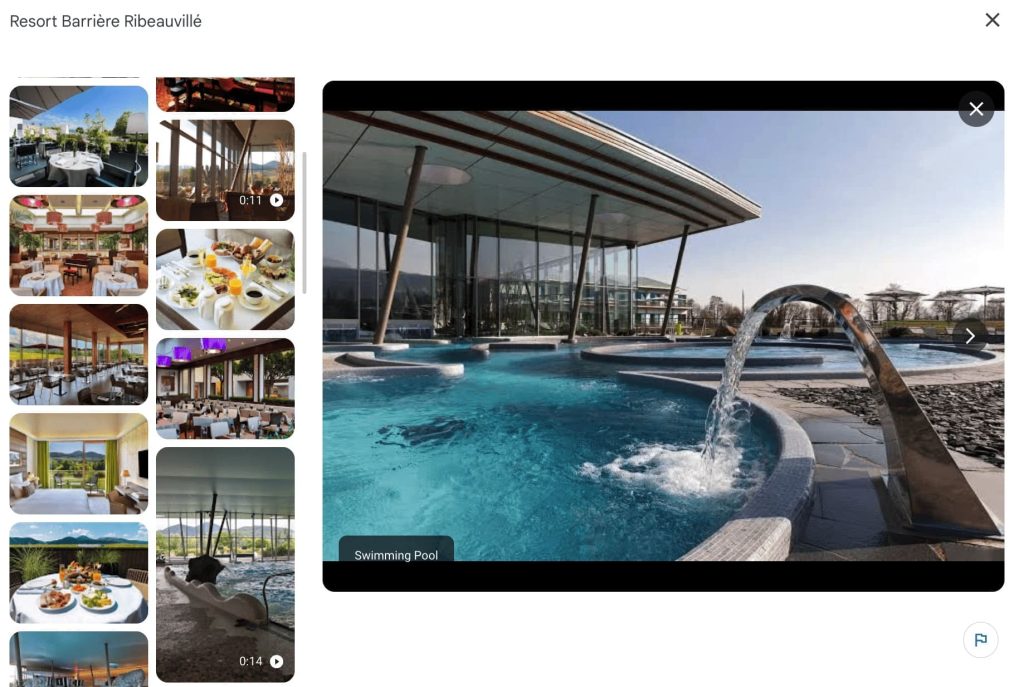
Photos are the first visual element a guest sees on a Google listing. They play a decisive role when it comes to securing bookings… And yet, adding new photos often falls by the wayside a few months after a listing is created.
Some good practices:
Quality takes precedence over quantity: professional, well-lit photos that accurately depict what guests can expect are way more effective than an extensive gallery with uninspiring shots.
Understanding what drives your listing’s performance is key to staying ahead of the competition.
The good practices set out above have a direct and measurable impact on two complementary areas: traditional local ranking (SEO) and the emerging field of generative search (GEO).
Google uses three main criteria to rank establishments in local results: relevance, distance, and prominence. A well-optimised listing will benefit all three.
In this context, attributes signal relevance. By accurately listing its services and amenities, a hotel will improve its chances of appearing on increasingly specific queries (so-called long-tail queries). For example: “hotel with spa London W9”, “hotel with breakfast included Dartmouth”, “hotel with gym Pangbourne”… These are high-intent searches, typically less competitive than generic queries, where a well-optimised listing can be a real game-changer.
So how well your listing is filled out (recent photos, well-managed reviews, up-to-date information) will improve your prominence and send trust signals to algorithms. The result: a higher ranking in the Local Pack (the block of three results that appears at the top of the page) and on Google Maps, where the battle for visibility is largely played out.
Local SEO remains essential, but it no longer works on its own. The rise of generative search engines marks a huge change in the way travellers look for a hotel.
When a user asks ChatGPT, Gemini or even Google and its AI Overviews a question such as “what’s the best hotel with pool in Poole for a family weekend?”, these tools don’t just churn out a list of links. They produce a snippet drawn from the data they deem the most reliable and structured… And Google listings are one of GenAI’s main sources of information.
This is where GEO (Generative Engine Optimization) AKA the art of optimising one’s presence to appear in AI-generated responses, comes into play. The good news? The levers are pretty much the same as for traditional SEO. Complete and accurate attributes, consistent information, recent and authentic reviews… a wealth of data that feeds GenAI algorithms and increases the chance of being cited in their responses.
Hotels embracing this latest shift are gaining a decisive competitive edge. Because while the traditional SEO battle has been going on for yonks, the GEO one has only just begun… And it’s the new turning point!

By Partoo
Transform the customer experience across your businesses with AI
Learn the secrets to effective Google Business Profile optimisation.
Since 18 September 2026, Google has been displaying Partoo’s Local Pack for many local searches…
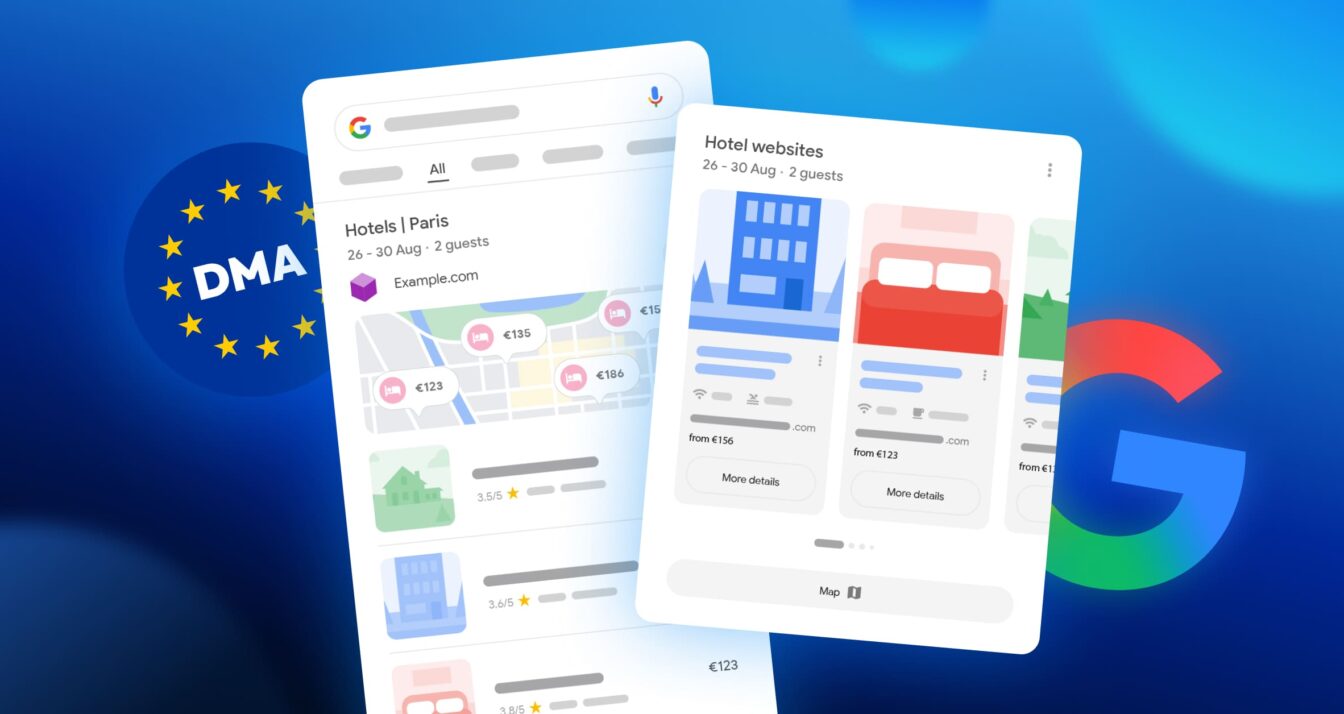
Google updated the appearance of its search results page in Europe on 8 September 2026…

Choosing the right voice of customer platform can transform how you manage CX, provided you…
Receive our best articles and practical guides directly in your inbox every month